Short answer: Digital marketing for plumbers is how homeowners find you on Google and call you. It covers your website, your Google profile, ads, reviews, email, and social media. Start with your Google profile and your website first.
They cost little or nothing, and they feed every other channel. Add paid ads only when you can track each call, so you know what each booked job costs.
- What digital marketing means for a plumber
- How digital marketing for plumbers works
- The channels explained plainly
- Which channel first, by budget
- Search marketing in short
- Tracking calls and bookings
- Tools you really need
- What digital marketing cannot do
- Mistakes plumbers make
- Common questions
What digital marketing means for a plumber
You may hear three phrases for the same thing. Digital marketing, internet marketing, and online marketing all mean one thing here. They mean using the internet to get phone calls and booked jobs.
The words differ, but the work is the same. You will also see internet marketing for plumbers and online marketing for plumbers used for the same services. Some searches drop the small words, such as digital marketing plumbers, internet marketing plumbers, or online marketing plumbers.
Digital marketing for plumbers is not one tool. It is a set of channels that work together. Your website is the base.
Your Google profile helps you show up near the customer. Ads put you at the top fast. Reviews prove you do good work.
Email and text bring past customers back. Social media keeps you visible in your town.
The goal is simple. You want more calls from homeowners who need a plumber. Clicks and likes do not pay your bills.
Calls and booked jobs do. Judge every channel by one question. Does it bring calls that turn into paid jobs?
How digital marketing for plumbers works: from a leak at night to a phone call
Picture a homeowner at 11 at night. A pipe bursts under the kitchen sink. Water spreads across the floor.
She grabs her phone and searches for an emergency plumber near her.
Google shows three kinds of results. Paid ads sit at the top. The map pack shows nearby plumbers with ratings.
Regular results sit below the map. She scans the names, stars, and distances. She taps the one that looks close and trusted.
Then she calls.
That whole trip takes two minutes. Your job is to be visible at each step. Your profile must show up in the map pack.
Your website must load fast and show a call button. Your reviews must look real and recent. If any step fails, she calls someone else.
This is why channels work as a team. Ads alone will not help if your reviews look bad. A great website will not help if no one finds it.
Each channel covers one step of the trip from search to call.

The channels explained plainly
Each channel below does one job. None of them works alone. Read each one and note where you stand today.
The table after this section sums up speed and cost, so you can compare them at a glance.
Your website
Your website is your home base on the internet. Every other channel sends people here. It must load fast on a phone.
It must show your phone number at the top. It must have one clear call button on every page. A homeowner with a leak will not hunt for your number.
If she cannot call in one tap, she moves on.
Your site also needs one page per service. Drain cleaning, water heater repair, and leak repair each deserve their own page. Google matches pages to searches.
One page for everything matches nothing well. See our guide to what your plumber website needs.
Local SEO
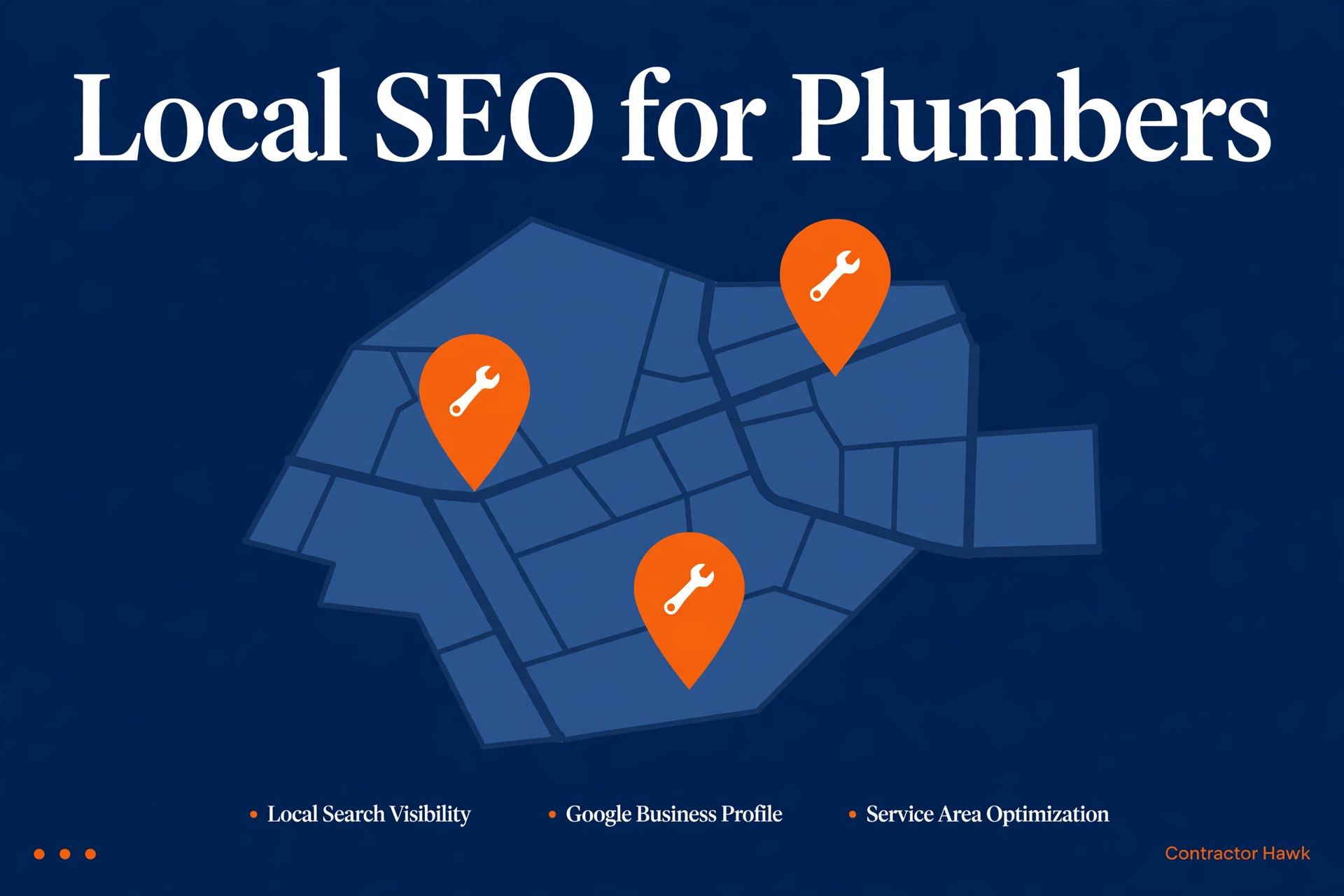
Local SEO is how you show up in the map pack and local results. Google picks local results by three things. Relevance means your profile matches the search.
Distance means how close you are to the customer. Prominence means how well known you are, from reviews and links. Google explains these three factors in its own help pages.
Local SEO work means a complete profile, correct categories, real photos, and steady reviews. It also means matching listings across the web. Your name, phone, and service area must match everywhere.
See our guide to how to rank in the Google map pack.
Paid ads
Paid ads put you at the top of Google fast. Google Ads charges you per click. Local Services Ads charge you per lead.
Ads work well for emergency jobs, where the customer calls now. They stop the day you stop paying. That is the trade.
Speed now, cost always.
Ads need guardrails. Set your service area tight. Block searches you do not serve.
Track every call. Without tracking, you cannot tell a good ad from a money pit.
Reviews
Reviews are proof. Homeowners trust other homeowners more than ads. Ask for a review after every finished job.
Make it easy with a direct link. Reply to every review, good or bad. A calm reply to a bad review tells the next reader how you handle trouble.
Never fake reviews. Never pay for reviews. Google removes fake reviews, and one scandal costs more than any ad.
Email and text
Email and text reach people who already know you. Past customers are your cheapest source of repeat work. Send maintenance reminders before winter.
Send seasonal tips in spring. Send a thank you after each job. Ask for a review in the same message.
Keep each message short and useful. See our guide to email and text campaigns for plumbers.
Social media
Social media keeps you visible between jobs. Post before and after photos of real work. Post short tips homeowners can use.
Post your team at a local event. You do not need to post every day. Two or three useful posts a week beat daily noise.
Social rarely brings emergency calls. It brings recall, so they think of you first. See our guide to what to post on social media.

| Channel | How fast | What it costs | Best for |
|---|---|---|---|
| Google profile and local SEO | Weeks to months | Mostly your time | Map pack calls near you |
| Website | Weeks to months | Build cost, then low upkeep | Turning visits into calls |
| Google Ads | Days | Per click, you set the budget | Emergency jobs now |
| Local Services Ads | Days | Per lead | Verified leads with less setup |
| Reviews | Weeks | Your time | Trust for every channel |
| Email and text | Days | Low monthly tool cost | Repeat work from past customers |
| Social media | Months | Your time, ads optional | Staying known in your town |
Which channel first, by budget
If money is tight, start free. Claim and complete your Google profile. Fix your website basics.
Ask every customer for a review. These three cost time, not money. They also feed every paid channel later.
If you have a small monthly budget, add one paid channel. Emergency plumbing fits Google Ads or Local Services Ads well. Pick one, not both, at first.
Track every call for a month. Keep what pays, cut what does not.
If your budget is healthy, add email and social next. Email brings repeat jobs from past customers. Social keeps you visible between emergencies.
Then add content, such as service pages and helpful posts. For a full list of tactics, see our guide to marketing ideas for plumbers.
One warning holds at every budget. Do not buy five channels at once. You will not know which one works.
Add one channel, measure it, then add the next.
Search marketing in short
Search marketing for plumbers means paying to show up when someone searches. Google Ads is the main tool. You pick the searches you want, such as emergency plumber near me.
You set a daily budget and a service area. You pay only when someone clicks. Your ad must match the search, or you pay for useless clicks.
Local Services Ads work differently. You pay per lead, not per click. Google shows a Google Verified badge on your ad.
The badge tells homeowners Google checked your business. Homeowners call straight from the ad. This fits plumbers well, because most leads are phone calls.
Both tools need the same guardrails. Block job seeker searches and DIY searches. Send ad clicks to a page that matches the ad.
Track calls from each ad. A click that never calls is a cost, not a result.
Tracking calls and bookings
Tracking is how you know what works. Start with a simple sheet. Each week, write down calls, forms, and booked jobs per channel.
Add what you spent per channel. Divide spend by booked jobs. That number is your cost per booked job.
It is the only number that matters in the end.
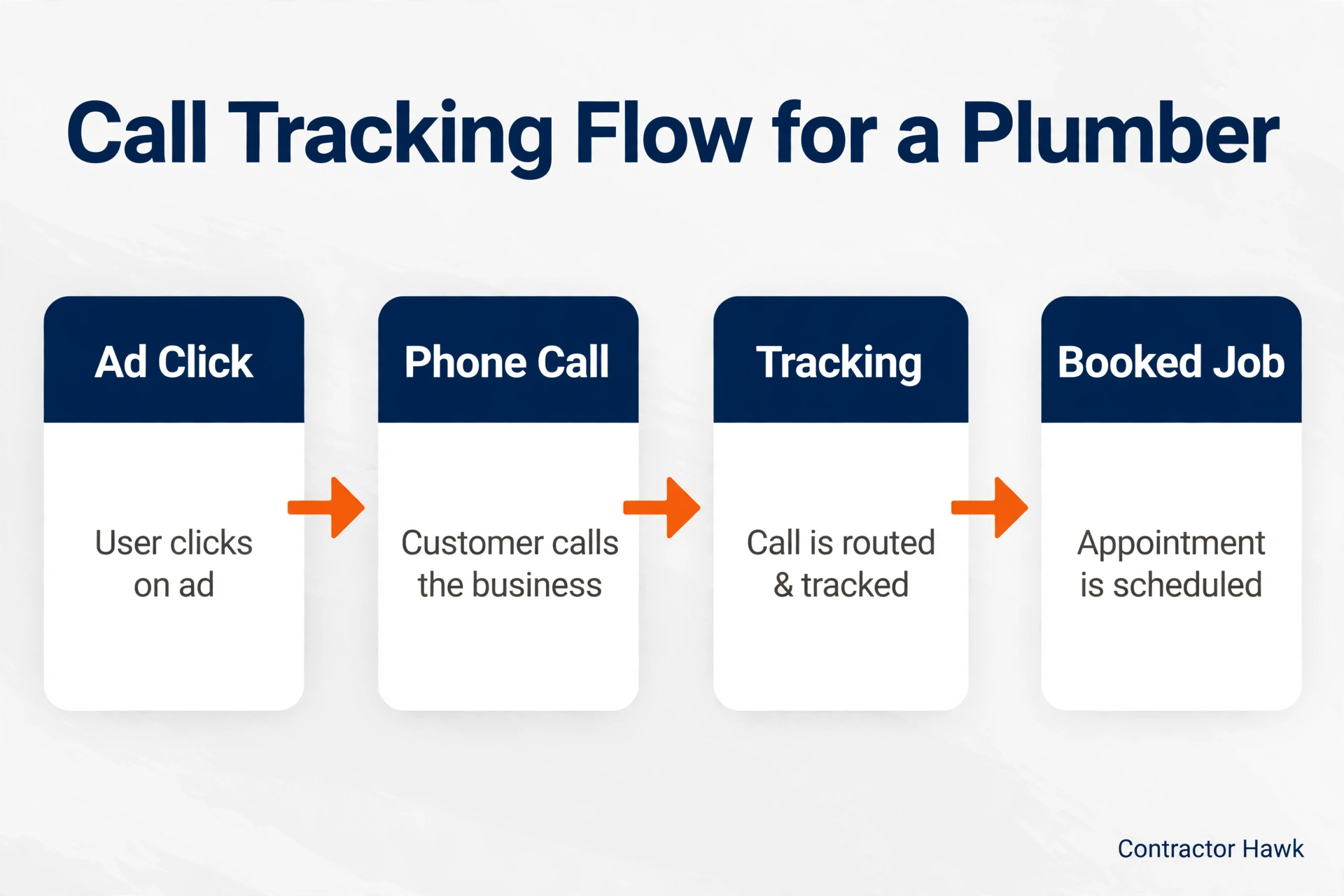
Call tracking makes this easy. A tracking tool gives each channel its own phone number. Calls to that number are logged by source.
You see which channel brings calls and which brings silence. Google Ads can also track calls as conversions, so ad calls show up in your reports.
Be patient with SEO results. Google says changes can take a few hours to several months to show. Judge SEO over months, not days.
Judge ads over weeks. Judge reviews and email over steady months of work. If a channel brings no calls after a fair test, cut it and move the money.
Tools you really need
You do not need a shelf of software. Start with free tools from Google. Google Business Profile runs your map listing.
Search Console shows which searches bring you visits. Analytics shows what visitors do on your site. PageSpeed Insights checks your site speed.
All four are free.
Paid tools come next, only when they save time. A call tracking tool ties calls to channels. An email tool sends reminders and review requests.
A scheduling tool books jobs from your site. Buy one tool at a time. Each tool must earn its cost in saved time or new jobs.
- Free: Google Business Profile, Search Console, Analytics, PageSpeed Insights
- Paid later: call tracking, email tool, scheduling tool
- Skip for now: fancy dashboards, rank trackers you never open
What digital marketing cannot do
Digital marketing cannot fix a weak business. It cannot turn bad reviews into good ones. It cannot make a slow phone answer fast.
It cannot guarantee first place on Google. No one can promise that, and anyone who does is selling smoke.
It cannot replace good work. A homeowner who had a bad visit will not return, no matter how good your ads look. It cannot bring calls overnight from SEO.
SEO builds over months. It cannot help if no one answers the phone. Missed calls are lost jobs, and no channel fixes that.
Use digital marketing for what it does well. It puts you in front of homeowners at the moment they need you. It proves your quality through reviews.
It brings past customers back. The work itself still has to be good.
Mistakes plumbers make
Paying for ads before the website is ready
Ads send people to your site. If the site loads slow or hides your number, you pay for clicks that never call. Fix the site first.
Ignoring reviews
Homeowners read reviews before they call. A profile with no recent reviews looks dead. Ask after every job, and reply to each one.
Chasing rankings instead of calls
First place for a broad term feels good. It means nothing if the calls go elsewhere. Track booked jobs, not positions.
Buying a cheap package with no reporting
If a vendor will not show calls and booked jobs, you cannot judge the work. Insist on a monthly report with calls, forms, and jobs.
Setting ads and forgetting them
Searches change, rivals bid higher, and bad clicks creep in. Check ads weekly. Block waste, fix weak ads, and move money to what calls.
Common questions
What is digital marketing for plumbers?
Digital marketing for plumbers means using the internet to get phone calls and booked jobs. It covers your website, Google profile, ads, reviews, email, and social media. The goal is not clicks or likes, but calls from homeowners who need work done, at a cost that leaves you profit.
Is digital marketing worth it for a small plumbing company?
Yes, if you start with the free and low cost parts. A complete Google profile, a fast website, and reviews cost time, not money. They bring map pack calls, and paid ads make sense once you can track each call and keep costs below what each job pays.
How much should I spend?
There is no fixed number that fits every shop, so start with what you can track. Spend on one paid channel at first, and watch cost per booked job for a month. If that number leaves you profit, raise the budget slowly, or fix the weak step if it does not.
Where do I start?
Start with your Google profile, claim it, verify it, and fill every field with photos and your service area. Next, fix your website basics, with a fast load, a clear call button, and one page per service. Then ask every customer for a review, since these three steps cost little, feed every other channel, and prepare you for paid ads.
How do I know it is working?
Track calls, forms, and booked jobs per channel each week, and compare them with what you spent. Your cost per booked job tells the real story, since rankings and clicks are clues, not proof. A channel works when calls rise and cost per job stays fair, so check ads weekly and SEO monthly when spend rises without jobs.
Digital or traditional marketing?
Digital wins for most plumbers, because homeowners search on phones when trouble hits. Yard signs, truck wraps, and local sponsorships still help, since they build recall in your town. Use traditional marketing to stay known, and digital marketing to catch demand at the exact moment it appears.
Digital marketing for plumbers works when each channel has one clear job. Your profile gets you found. Your website turns visits into calls.
Ads bring speed. Reviews build trust. Email brings customers back.
Start with the free parts, track every call, and add paid channels one at a time.
If you want help running all of this, a marketing partner that works only with plumbers can run the whole system for you.
Want a clear plan for your shop? Get your free audit. We will look at your profile, website, and ads, and show you the next step that pays.