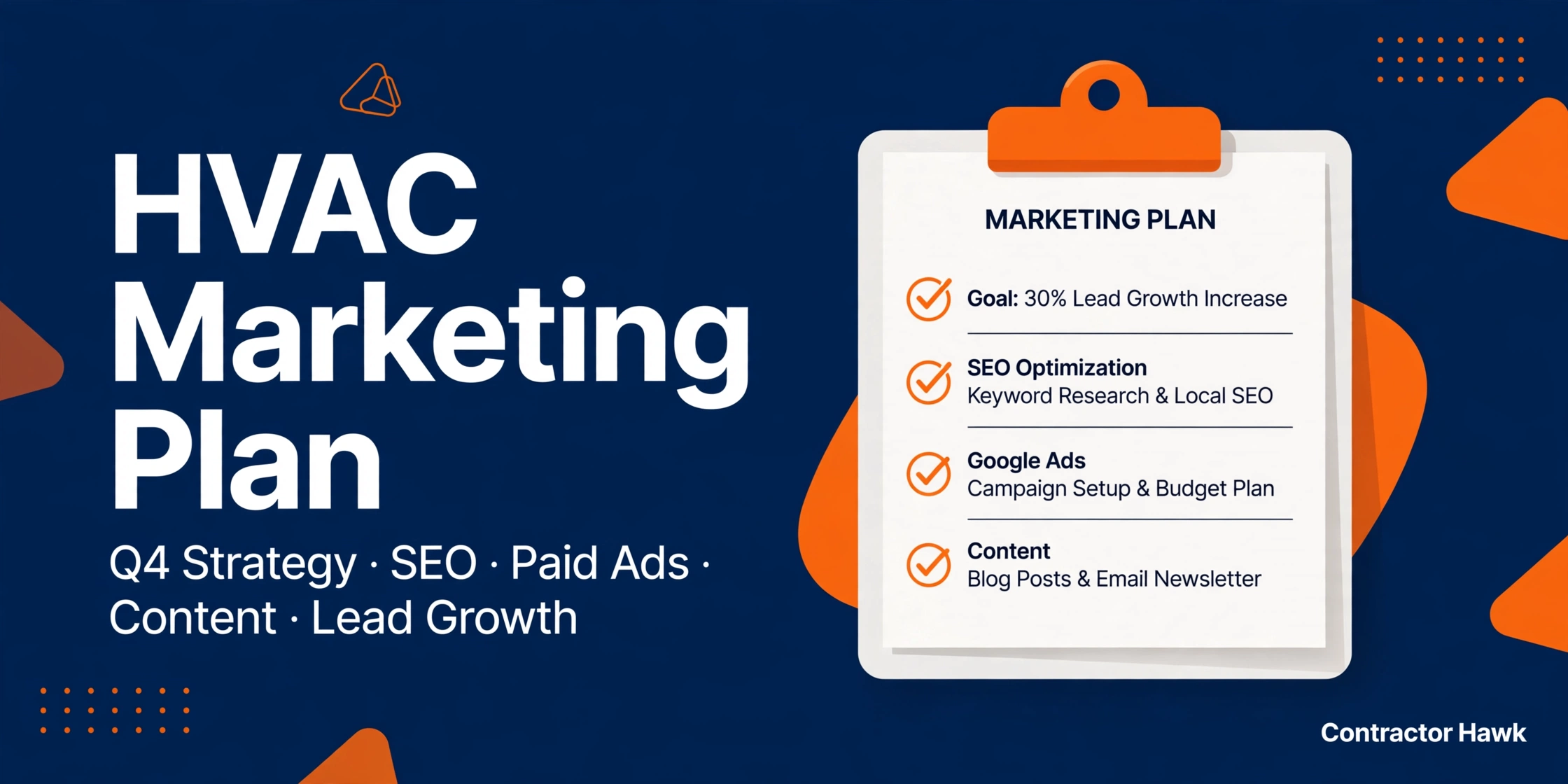
An HVAC marketing plan is a short written list of what you will do to get calls, and how you will know it worked. Most plans fail because they are 20 pages long and never get read. Yours will fit on one page.
This guide gives you that one page template and a simple month by month calendar. It also gives you an honest look at what a plan costs in time and money. By the end, you will know what to do and whether it is worth your money.
Quick answer:
- Write a one page plan. One goal, three channels, one way to count calls.
- Do the free work first. Your Google Business Profile, reviews, and follow up on old quotes.
- Add paid ads only when you can track every call they bring.
- A plan is worth the money when it brings calls you can count. Start small and review every 90 days.
What an HVAC marketing plan really is
A marketing plan is not a binder full of charts. It is a short list of jobs. It says who does what, by when, and what it may cost.
That is the whole idea. If a plan cannot fit on one page, it will not get used. Busy owners need a plan they can read in two minutes.
So what do you do, and is it worth your money? You write the one page plan in this guide. You do the free parts first.
You add paid ads only when you can track the calls. It is worth the money when the calls you can count are worth more than what you spend.
Think of the plan as a work order for your business. A work order lists the job, the parts, and the price. Your plan lists the channel, the task, and the budget.
When the month ends, you check what got done.
One more thing. A plan protects you from shiny offers. When a salesperson calls with a new listing or a new app, you check the plan.
If it is not on the plan, you say no or you wait. That one habit can save you a lot of wasted spend over a year.
Your HVAC marketing plan on one page

Here is how you build the plan in five steps:
- Write one goal you can count.
- Name the two services you want more of.
- Pick three channels and give each a job.
- Set a monthly budget you can afford.
- Write how you will ask for reviews and follow up on quotes.
Now fill in the eleven rows below. Keep each answer to one line. Use the example column as a guide, then replace it with your own words.
This table is made to screenshot and keep on your phone.
| Part of the plan | What to write | Example |
|---|---|---|
| Your goal | One number for the next 12 months | Add 30 maintenance plan members |
| Who you serve | The area you can reach fast | Homes in three nearby suburbs |
| Main services | The two jobs you want most | AC tune ups and system installs |
| Monthly budget | What you can spend without stress | One fixed dollar amount you set |
| Channel 1 | Your main way to get calls | Google Business Profile and reviews |
| Channel 2 | Your second way to get calls | Google Ads for AC repair searches |
| Channel 3 | Your third way to get calls | Follow up on old quotes by text |
| Reviews routine | How you ask, and how often | Ask after every finished job |
| Follow up routine | What you do with old leads | Text every open quote after 3 days |
| How you measure | One number you check each month | Calls booked from each channel |
| Stop doing | One thing you will quit | Paying for listings that bring no calls |
Your goal. Pick a number you can count at the end of the year. New maintenance plan members is a good one.
Booked service calls works too. Do not pick five goals. One goal keeps every choice simple.
Who you serve. Write the towns or zip codes where your trucks can arrive fast. Marketing to areas you cannot serve well wastes money.
Stay inside the map you can cover.
Main services. Name the two jobs you want more of this year. Many owners pick tune ups and installs.
Tune ups fill the slow months. Installs pay the big bills. Your two may differ, and that is fine.
Monthly budget. Write a dollar amount you can spend every month without stress. A budget you cannot keep is worse than no budget.
Start small. You can raise it when the calls prove it works.
Your three channels. A channel is simply a way calls reach you. Good options for HVAC shops are your Google Business Profile with reviews and your website with basic SEO.
Others are Google Ads, follow up texts to old quotes, Local Services Ads, and referral asks after each job. Pick the three that fit your town and your budget. Ignore the rest for now.
Channel 1 should be free. Claiming your Google Business Profile costs nothing, and Google says it helps you manage how your business shows on Search and Maps. You can read how to claim it in the Google Business Profile help center.
Add your hours, your services, and real photos of your trucks and techs.
Reviews routine. Write exactly when you ask for a review. The best moment is right after a finished job, while the customer is happy.
Have the tech send a short text with the review link. Ask every time, not just when you remember.
Follow up routine. Old quotes are the cheapest leads you own. Write when you follow up.
A simple rule is to text every open quote after 3 days and call after 7. Most shops never follow up at all, so even a simple routine puts you ahead.
How you measure. Pick one number: calls booked from each channel. Ask every caller how they heard about you.
Write it down. At the end of the month you will see which channel earns its keep.
Stop doing. Every plan needs a quit list. Name one spend that brings no calls.
Cancel it or pause it. The money you save is the easiest win in your whole plan.
What a marketing plan costs in time and money

A marketing plan costs two things: money and your time. Both matter. A cheap plan that eats ten hours a week is not cheap.
You will not find exact prices here, and you should not trust any article that gives them. Prices change by city, by season, and by who does the work. What follows are the real cost factors, so you can judge any quote you get.
| What you pay for | What drives the cost up or down |
|---|---|
| Google Business Profile | Free to claim. Your time to keep it fresh is the real cost. |
| Website fixes | Age of your site, and whether you or a pro does the work. |
| SEO help | How much content you need, and how busy your city is. |
| Google Ads spend | You set the budget. Busy keywords cost more per click. |
| Review and texting tools | The features you pick, and the number of techs. |
| Your own time | Who asks for reviews, and who follows up on quotes. |
Start with the free row. Your profile, your reviews, and your follow up cost you time, not cash. Many owners can handle this work in a few hours a week.
Do this first and keep it going for 90 days before you add paid spend.
When you are ready for paid ads, you stay in control of the cost. Google Ads lets you set a daily budget, which caps what you spend while you test. Read how budgets work in the Google Ads help center before you launch anything.
Work out your number before you spend it. Our guide to your HVAC marketing budget walks you through the math. The rule is simple: never spend money you cannot track back to calls.
The most expensive mistake is paying for help with no reporting. If an agency or a tool cannot tell you how many calls it brought last month, pause it. A good partner reports calls and cost per call every single month.
Your 12 month calendar: what to do and when
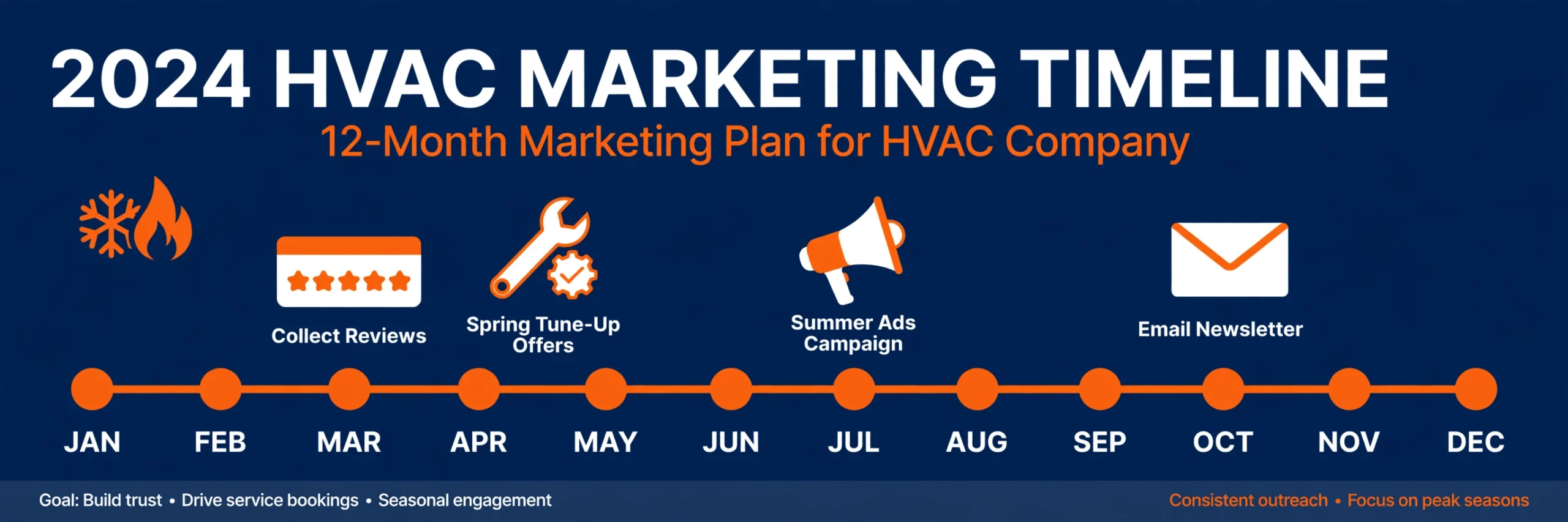
HVAC work runs on seasons. Your marketing should too. Below is a simple calendar.
Each season has one main job and a short list of extras.
Spring: fill the tune up schedule
Main job: offer tune ups to past customers by text and email. Spring is when systems wake up. A short message with a booking link does the work.
Also do: ask for reviews after every tune up, and add fresh spring photos to your Google Business Profile. Update your hours if they changed.
Summer: capture the rush
Main job: be ready when AC units fail. This is when Google Ads for HVAC earns its keep, because people search for AC repair in the moment. Keep your budget capped and your phones staffed.
Also do: if you run Local Services Ads, keep your Google Verified badge active and your reviews fresh. Respond to every review, good or bad, within a day.
Fall: push maintenance plans
Main job: sell maintenance plans before winter. Call your tune up customers from spring. A plan member is a customer you do not have to win back next year.
Also do: this is the best time for slow website work. Our HVAC SEO guide covers the basics. Google’s own SEO starter guide says the same thing we tell owners: clear page titles and content written for people beat tricks every time.
Winter: heating checks and planning
Main job: promote heating tune ups and safety checks. Furnaces fail on the coldest nights. Be the company people already know.
Also do: follow up on every open quote from the year. Then sit down for one hour and review the plan. What brought calls?
What did not? Write next year’s one page plan from what you learned.
How to know the plan is working
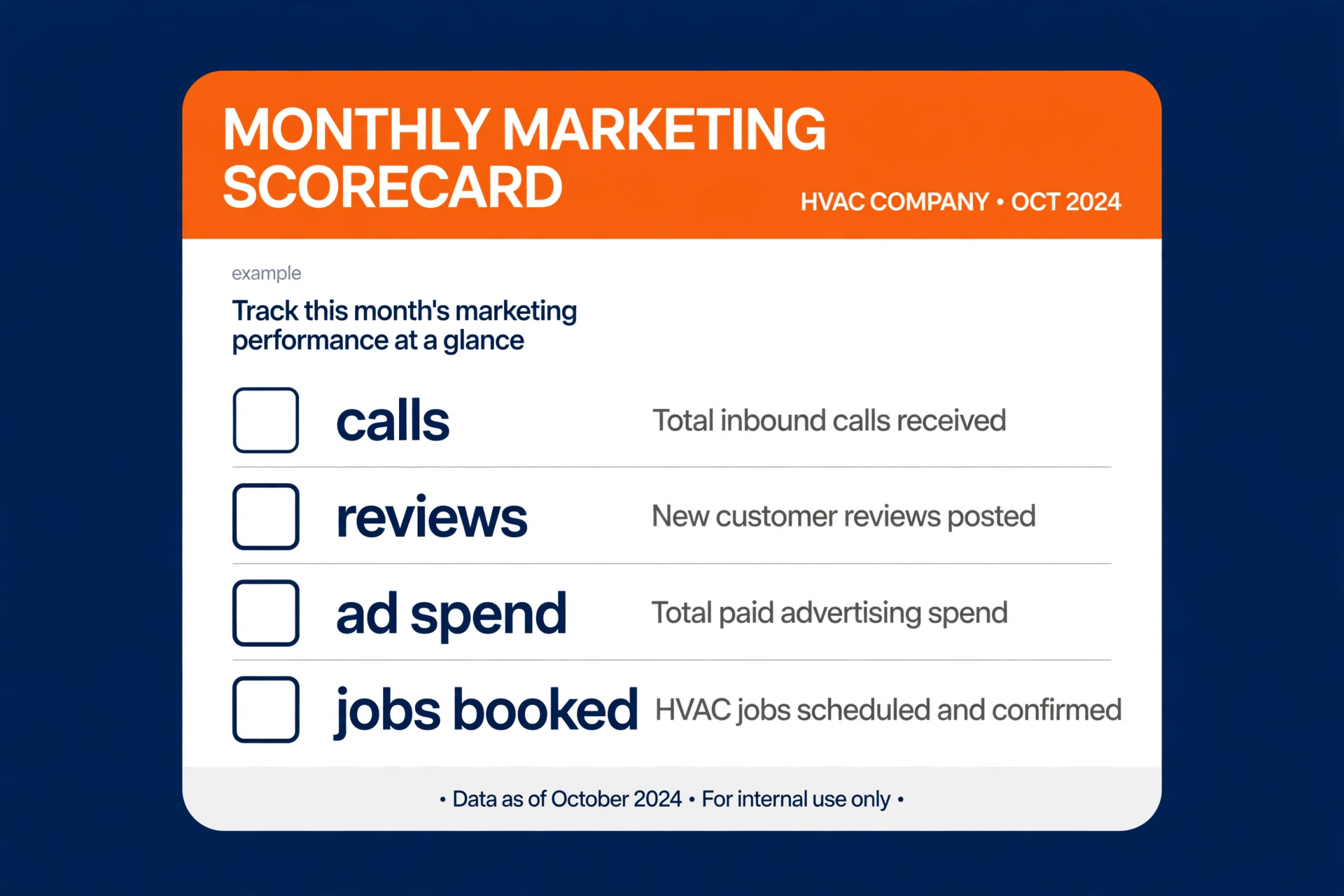
A plan without tracking is a guess. Tracking does not need to be fancy. It needs to be honest and regular.
Ask every caller one question: how did you hear about us? Write the answer down. A notebook by the phone works.
A simple sheet on your computer works better. What matters is that you do it every time.
Once a month, count the calls from each channel. Your profile, your ads, your follow ups, your referrals. One channel will win.
One will lose. That is normal.
Judge the plan at 90 days, not at 9. Some channels need time. SEO and your review count build month by month.
Ads and review requests can pay back faster. Give each channel a fair test before you cut it.
Keep what brings calls. Cut what does not. Raise the budget on winners slowly.
For more ideas on where calls come from, read our guide to getting more HVAC customers.
Common mistakes HVAC owners make
We review a lot of HVAC marketing. The same mistakes show up again and again. Here are the ones to avoid.
- No written plan. The plan lives in the owner’s head. Nothing gets measured, and random spending fills the gap.
- Too many channels at once. Five half done channels lose to two well run ones. Master three, then add a fourth.
- Spending before tracking. Ads run for months with no call tracking. Nobody knows what worked. Track first, spend second.
- Ignoring reviews. The profile looks dead. Old reviews sit unanswered. New customers pick the shop that looks alive.
- Paying for listings that bring no calls. Directories and apps charge every month. If a listing brought zero calls in 90 days, cancel it.
- Changing the plan every week. A new idea arrives, and the plan gets tossed. Give each version 90 days before you judge it.
- Hiring help with no monthly report. Money goes out, and no report comes back. Demand a simple report: calls, cost per call, what changed.
If you want help running the plan, work with a marketing partner built for HVAC contractors. Whoever you hire, make them report calls every month. No report, no renewal.
Common questions
Do I need a written HVAC marketing plan?
Yes, but keep it to one page. A short written plan stops you from spending on random ideas. It reminds you what to do each month.
Review it once a quarter. When a salesman calls, check the plan before you say yes.
How much should an HVAC company spend on marketing?
Spend follows your revenue and your goals. Most owners start with what they can afford each month without stress. List your real costs first, then pick one paid channel.
Scale it up only when you can track the calls it brings.
What should be in an HVAC marketing plan template?
A goal you can count, the services you want more of, and who you serve. Add a monthly budget, your top three channels, and one way to measure calls. Include a reviews routine and a follow up routine for old leads.
That fits on one page. Leave everything else out.
How long before a marketing plan shows results?
Some parts pay back fast. Review requests and Google Ads can bring calls in weeks. SEO and a good reputation take months of steady work.
Judge the plan at 90 days, not 9. Keep what brings calls. Cut what does not.
Should I hire an agency or do the plan myself?
Do the free parts yourself first. Claim your profiles, ask for reviews, and follow up on old quotes. Hire help when you have calls to track and a budget to protect.
A good partner reports calls and cost per call every month.
Start with the one page template today. Fill in the eleven rows before the week ends. A simple plan you use beats a perfect plan you never read.
Want a second pair of eyes on your plan? Our free marketing audit reviews your Google profile and website, and tells you what is costing you calls.
Our promise on monthly plans: 10 new customers in 60 days, or your third month is free.