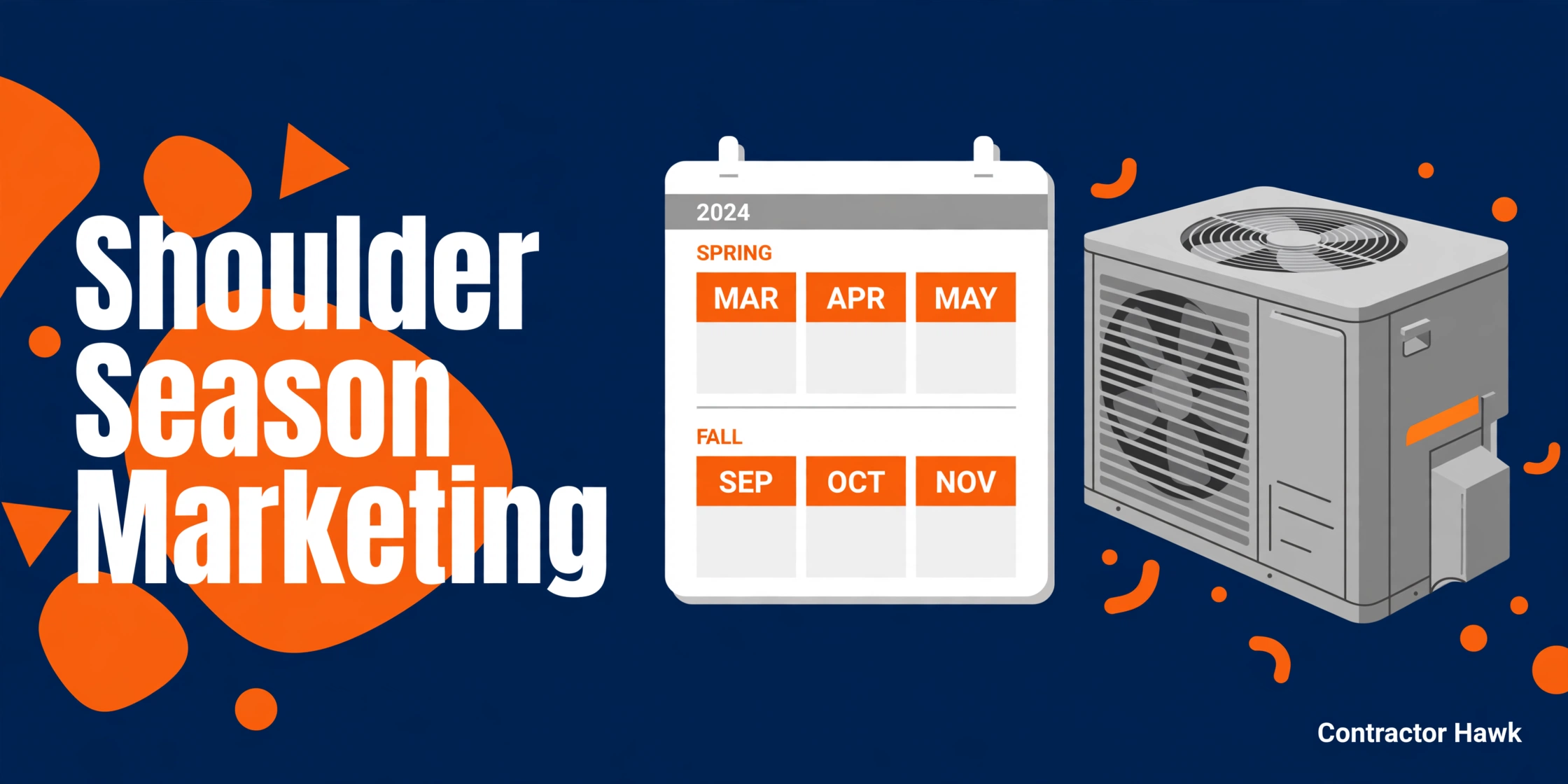
HVAC shoulder season marketing is simply how you keep the schedule full when the weather is mild. Shoulder seasons are spring and fall. They sit between the summer cooling rush and the winter heating rush.
Calls slow down. Techs sit idle. This guide gives you a simple calendar, a checklist you can screenshot, and a clear view of where your dollars should go.
Follow it and the slow months can pay for themselves.
Quick answer: what do I do, and is it worth my money?
- Market in spring and fall so your techs stay booked between peak seasons.
- Focus on tune ups, maintenance plans, and email to past customers.
- Yes, it is worth the money. A few booked tune ups cover the cost of simple marketing.
Table of contents
- What HVAC Shoulder Season Marketing Means
- Why Slow Months Reward Owners Who Keep Marketing
- Your Spring Marketing Calendar
- Your Fall Marketing Calendar
- Where to Spend Your Slow Season Dollars
- The Screenshot Checklist
- Common Mistakes HVAC Owners Make in Slow Months
- Frequently Asked Questions
What HVAC Shoulder Season Marketing Means
HVAC shoulder season marketing is the work you do to win jobs in spring and fall, when mild weather means fewer emergency calls. Instead of waiting for the phone to ring, you promote tune ups, system checks, and maintenance plans. You stay visible while competitors go quiet.
When peak season returns, you are the company homeowners remember.
You do not need a big budget or a marketing degree. You need a plan you will actually follow. If you would rather hand this work to someone else, consider a marketing partner for HVAC companies that does this every day.
Why Slow Months Reward Owners Who Keep Marketing
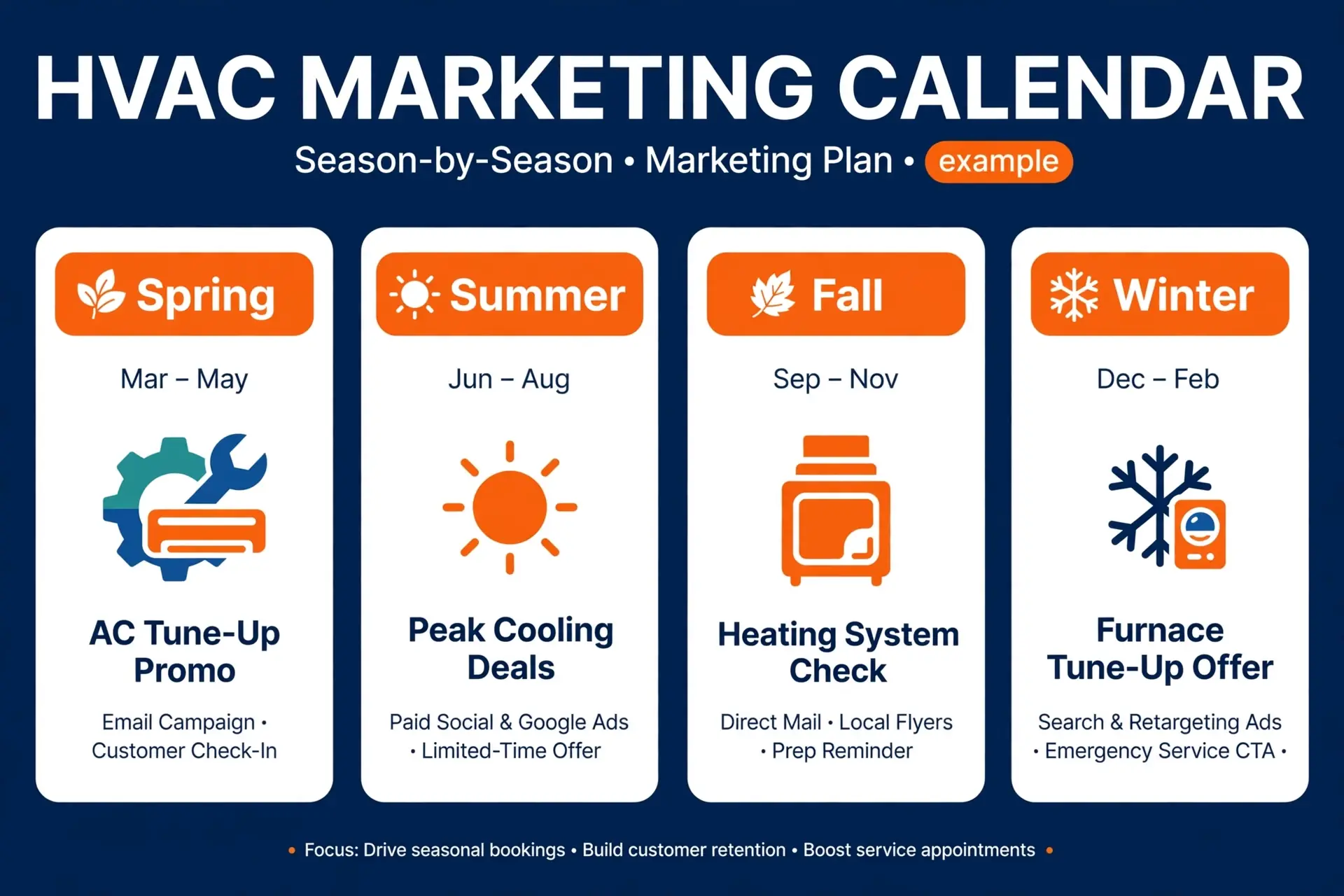
Most owners cut marketing when calls slow down. That is the exact moment to keep going. Here is why the slow months reward you.
- Your competitors go quiet. Many owners stop marketing in April and October. Your message stands out when others disappear.
- Your techs have open hours. You can offer fast booking. Homeowners love a company that can show up this week.
- Email costs you almost nothing. A short note to past customers can fill a week of tune ups.
- Tune ups today become replacements tomorrow. The tech in the home sees old systems first. That visit starts the next sale.
Your Spring Marketing Calendar
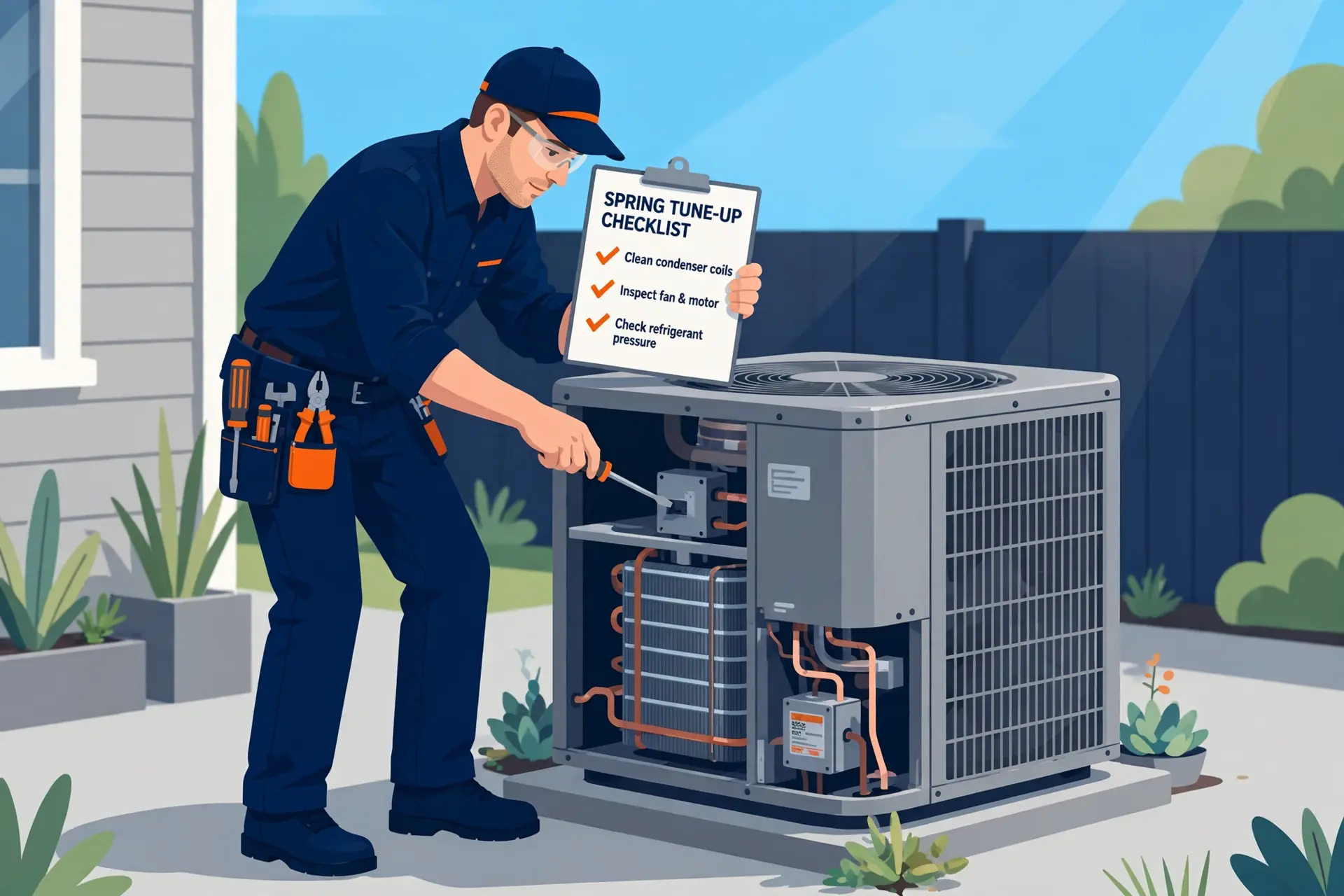
Spring is AC season prep. Your goal is simple: book cooling tune ups before the first heat wave. Work this calendar from March through May.
| Month | Focus | Main action |
|---|---|---|
| March | Wake up your list | Email past customers about AC tune ups |
| April | Book tune ups | Run tune up ads and post the offer online |
| May | Fill the last gaps | Call open days and push maintenance plans |
In March, send one plain email to every customer from the last two years. Offer an AC tune up with a clear price. Keep the email short.
One offer, one phone number.
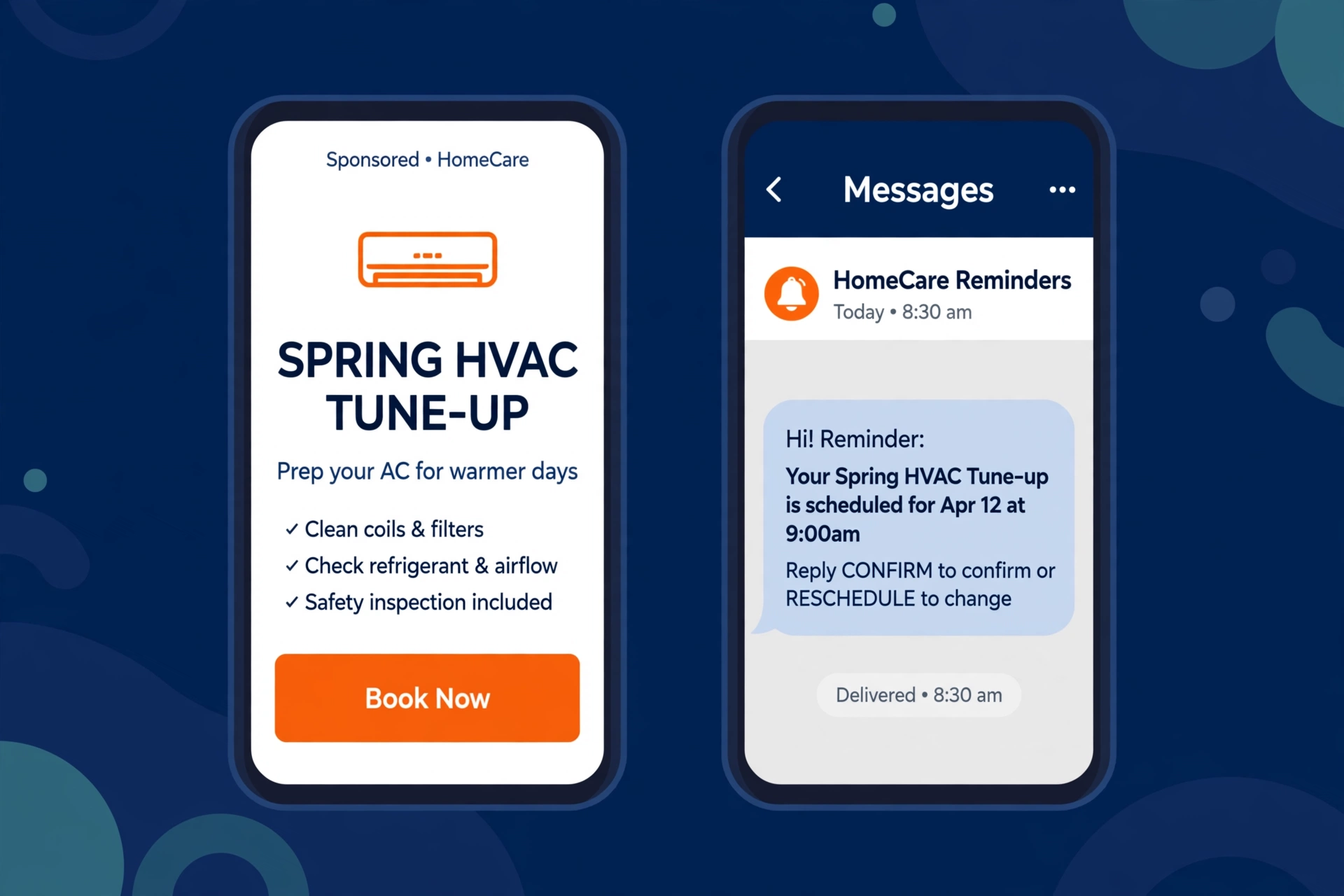
In April, HVAC email marketing keeps working in the background while you add paid reach. Run Facebook ads for HVAC aimed at homeowners in your service area, with the tune up as the offer. Post the same offer on your Google Business Profile, since Google says posts share your offers with customers on Search and Maps.
In May, look at your schedule and call the empty days first. Offer those slots to your email list as priority booking. On every tune up visit, offer the maintenance plan.
One yes covers the slow days around it.
Your Fall Marketing Calendar
Fall is heating season prep. Your goal is the mirror of spring: book heating tune ups before the first cold snap. Work this calendar from September through November.
| Month | Focus | Main action |
|---|---|---|
| September | Plan ahead | Email past customers about furnace tune ups |
| October | Book heating checks | Run ads and post the offer on your profile |
| November | Last call before cold | Send reminders and ask for reviews |
In September, email the same list with a heating tune up offer. Mention safety checks on the furnace. Homeowners with kids and older parents respond to safety.
In October, repeat the April playbook with heating as the offer. Update your Google Business Profile hours for the season, since Google gives guidance for businesses with seasonal hours. If you run Local Services Ads, check that your Google Verified badge is in good standing before the heating rush.
In November, send a last call reminder to anyone who opened your emails but did not book. After each tune up, ask for a review while the tech is still at the door. Reviews earned now lift you when winter demand spikes.
Where to Spend Your Slow Season Dollars
Start with what you already own. Your email list is free to use. Your Google Business Profile is free to update.
Your past customer phone numbers are free to call. These three fill more slow season slots than anything else.
Add paid ads only with a daily budget you set yourself. Facebook ads work well for tune up offers because you can show them to homeowners near you. Google Ads work best for people already searching, like “AC tune up near me”.
Pause any ad that does not book jobs within two weeks.
Fold all of this into a simple HVAC marketing plan for the full year, so spring and fall are planned and not panicked. A single maintenance plan signup often pays for weeks of simple marketing. That is how you know the spend is worth it.
The Screenshot Checklist
Save this list. Work through one item each week of the shoulder season.
- Email your list. One short email per month with one clear tune up offer.
- Post on your Google profile. Share the tune up offer as a post with a photo.
- Update your hours. Make sure seasonal hours are correct on Google.
- Run one ad. A small daily budget on Facebook for the tune up offer.
- Ask for reviews. Ask after every tune up, every time.
- Offer the plan. Pitch the maintenance plan on every slow season visit.
- Call empty days. Fill open slots before you buy more ads.
- Track what booked. Write down which offer filled the schedule.
Common Mistakes HVAC Owners Make in Slow Months
- Pausing everything. Going dark for two months means starting from zero in June. Keep a small steady presence instead.
- Discounting too deep. A fair tune up special fills the schedule. A huge cut trains customers to wait for deals.
- Skipping reviews. Tune up visits are the easiest time to earn five star reviews. Do not waste them.
- Ignoring your profile. An empty Google profile with old hours looks closed. Update it each season.
- Chasing strangers only. Past customers book faster and complain less. Email them before you pay for new leads.
Frequently Asked Questions
When are the HVAC shoulder seasons?
Spring runs from March through May in most of the country. Fall runs from September through November. These are the months between the summer cooling rush and the winter heating rush.
Exact timing shifts with your local weather, so watch your own call volume to set your calendar.
Is shoulder season marketing worth it for a small HVAC company?
Yes. Small companies feel slow months the most, since a few empty days hurt more. Low cost moves like email and Google Business Profile posts can fill those days.
You do not need a big ad budget. You need a simple plan you follow every spring and fall.
What is the best offer to promote in spring and fall?
A tune up with a clear price and a clear list of what is checked. In spring, sell AC tune ups. In fall, sell heating tune ups.
Add a maintenance plan upsell on every visit. Simple offers book faster than clever ones, because the homeowner understands exactly what they get.
How much should I spend on marketing during slow months?
Spend what you can track to booked jobs. Start with free tools: your email list and your Google Business Profile. Add paid ads only with a daily budget you set yourself.
If an ad does not book tune ups within two weeks, pause it and try a new message.
Should I pause my Google Ads in the shoulder season?
Do not pause everything. Lower budgets on expensive emergency keywords and keep ads for tune ups and maintenance plans running. Pausing all ads means Google has to relearn when you restart, which can waste money.
A small steady spend keeps you visible while competitors go quiet.
How do maintenance plans help in slow months?
They turn one visit into repeat visits. A plan member comes back for spring and fall tune ups by default. That fills your slow season schedule with work you already sold.
Offer the plan on every tune up visit and make joining take less than two minutes.
Pick one action from the checklist and do it this week. Then pick the next one. Slow months reward owners who keep showing up.
Want a second pair of eyes on your slow season plan? Our HVAC marketing services include a free review of your Google profile and website, and we will tell you what is costing you calls. Get your free audit.
Our slow season guarantee: Contractor Hawk stands behind this work.
“10 new customers in 60 days, or your third month is free.” Read the full terms before you start.