Your HVAC marketing budget is the money you set aside each year to win new customers. For most HVAC companies, that number lands between 5 and 15 percent of gross revenue. New and fast growing companies spend near the top of that range.
Established companies with full schedules and strong referrals spend near the bottom. This guide will help you pick your number, split it across channels, and compare agency quotes with confidence.
Quick answer:
- Use 7 to 10 percent of gross revenue as your starting budget.
- New and fast growing companies often spend 10 to 15 percent.
- Established companies with strong referrals often hold near 5 to 8 percent.
- Split the budget between ads that win calls now and assets that win calls over time.
In this guide:
- How much should an HVAC company spend on marketing?
- What moves your HVAC marketing budget up or down
- What your money actually buys: ad spend vs agency fees
- How to split your HVAC marketing budget across channels
- A worked example: from a revenue goal to a monthly budget
- Common mistakes with HVAC marketing budgets
- How to compare HVAC marketing agency pricing
- Frequently asked questions
How much should an HVAC company spend on marketing?
Most HVAC marketing guides point to 7 to 10 percent of gross revenue as a starting budget. The U.S. Small Business Administration reports that small businesses spend about 8 percent of revenue on marketing on average.
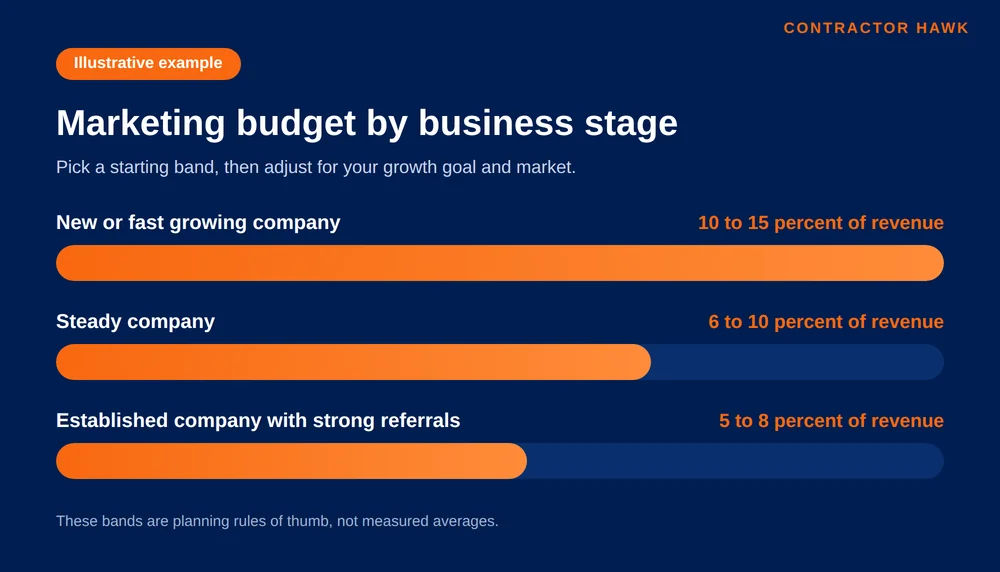
It also says new businesses should spend more, while established businesses can spend less. Your number should follow your goal, not just a rule.
New companies, and companies pushing hard to grow, often spend 10 to 15 percent of revenue on marketing. Companies holding steady often land between 6 and 10 percent.
Companies with full schedules and strong referrals often stay near 5 to 8 percent. These bands are planning rules of thumb, not measured averages, so treat them as a starting point.
What moves your HVAC marketing budget up or down
No single percent fits every company. Six factors move your number.
- Your growth goal. Holding a steady schedule costs less than adding trucks or entering a new town.
- The age of your business. A new company must buy attention. An established company protects a full schedule.
- Local competition. More bidders chasing the same searches push ad costs higher.
- The season. Peak summer demand converts better than a slow shoulder month.
- Your close rate and average ticket. A team that books 4 of 10 calls needs more leads than one that books 6 of 10.
- Your foundation. A fast site, strong reviews, and a complete Google Business Profile turn more paid traffic into booked jobs.
If your foundation is weak, fix it before you raise ad spend. This is how a marketing partner for HVAC companies sequences this work: foundation first, then traffic.
What your money actually buys: ad spend vs agency fees
One quote can be twice another and still be the better deal. The difference is what sits inside it.
Your HVAC marketing budget has two big parts. Mixing them up is the most common source of surprise.
| Line item | What it pays for | What changes the cost |
|---|---|---|
| Ad spend | Clicks on Google Ads and leads from Local Services Ads. This money goes to Google, not to the agency. | Competition for your searches, the season, your service area size, and the budget you set. Google Ads bills per click. Local Services Ads bills per lead. |
| Agency or freelancer fees | Planning, running, and reporting on your marketing: ads, SEO, content, reviews. | The number of channels, your service area size, and how much work you keep in house. |
| Website and tools | Hosting, call tracking, review software, online booking. | What you already have versus what you still need. |
| Offline and retention | Truck wraps, mail, email, and campaigns to past customers. | List size, how often you send, and print versus digital. |
On Google Ads, you set an average daily budget and pay per click. Google Ads Help explains how bids and budgets work.
On Local Services Ads, you set a weekly budget and pay only when a customer contacts you. Google’s Local Services Help explains how bidding for leads works.
How to split your HVAC marketing budget across channels
Think in two buckets. Bucket one buys calls now: Google Ads and Local Services Ads. Bucket two builds calls over time: your website, your Google Business Profile, reviews, and SEO.
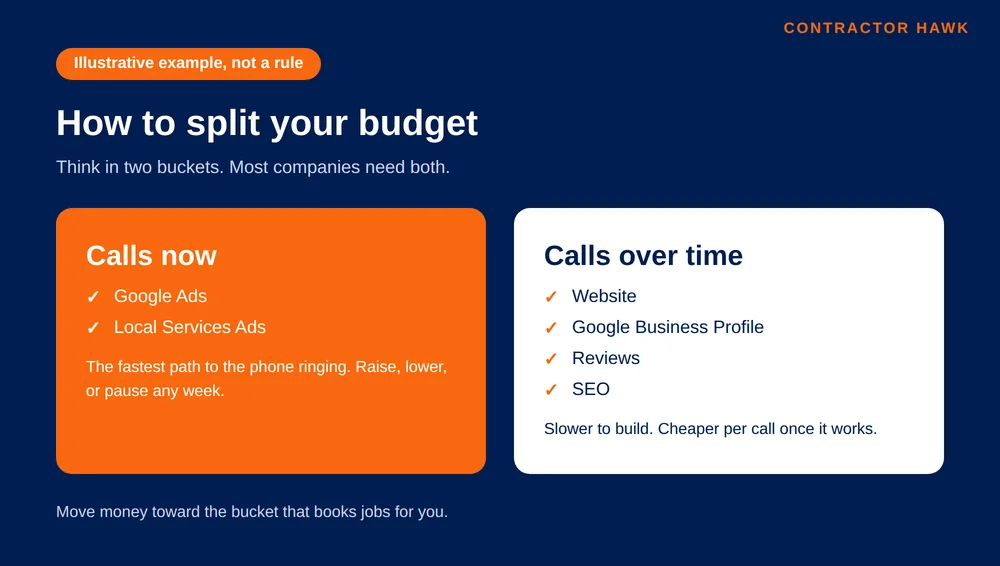
Most companies need both buckets. The mix shifts with your season and your schedule.
Local Services Ads show above the regular results and carry a Google Verified badge, the single badge Google now uses for checked advertisers.
The chart below shows one example split for steady growth. It is an example, not a rule. Move money toward the bucket that books jobs for you.
- Calls now. The fastest path to the phone ringing. You can raise, lower, or pause the budget any week.
- Calls over time. Slower to build, cheaper per call once it works, and it keeps working when ads pause.
The second bucket takes patience. Read what results to expect from your marketing and how long it takes before you judge it. (Link planned, post not yet published.)
A worked example: from a revenue goal to a monthly budget
This is an example using round numbers. Your numbers will differ.
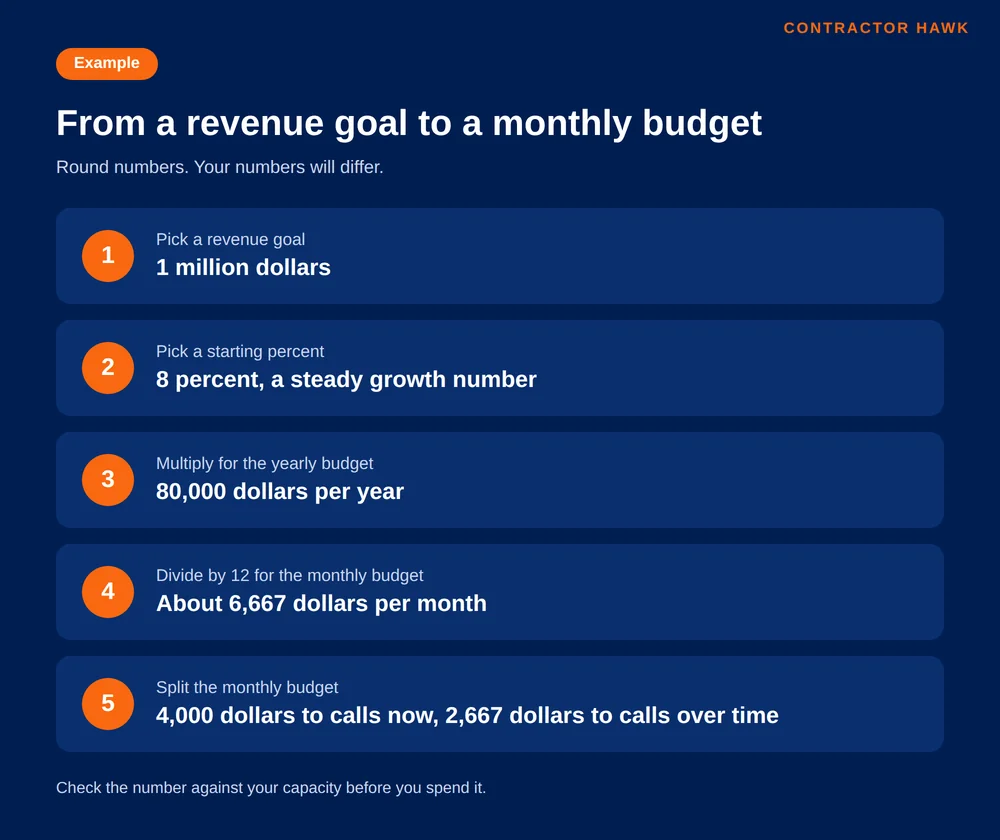
- Pick a revenue goal. Example: 1 million dollars.
- Pick a starting percent. Example: 8 percent, a steady growth number.
- Multiply. Example: 80,000 dollars per year for marketing.
- Divide by 12. Example: about 6,667 dollars per month.
- Split the monthly number into buckets. Example: 4,000 dollars to calls now, 2,667 dollars to calls over time.
Now check the number against your capacity. If it would buy more calls than your techs can run, lower it or spend it on past customers. If it cannot fill the schedule, raise the percent or fix your close rate first.
Common mistakes with HVAC marketing budgets
- Comparing quotes by price alone. A low fee with a thin scope buys you reports, not calls.
- Forgetting ad spend. The agency fee is not the whole budget. Ads cost extra.
- Running ads to a weak site. If the site hides the phone number or loads slowly, paid clicks bounce instead of booking.
- Spreading a small budget across six channels. One channel done well beats four done thin.
- Going dark in slow months. Pausing everything means rebuilding from zero when demand returns.
- Not tracking calls. Without call tracking, you cannot tell which dollar actually worked.
Not sure where your money is going? A free audit shows you which part of your spend is leaking.

How to compare HVAC marketing agency pricing
Agencies price their work in different ways. Some charge a flat monthly fee. Some charge a fee plus a share of ad spend.
Some price by project, like a website rebuild. Ask every agency the same five questions before you compare numbers.
- What exactly is included in the fee, and what costs extra?
- Is ad spend billed separately, and who controls the ad account?
- Who owns the website, the Google Business Profile, and the ad accounts if we part ways?
- How do you report results, and will I see calls, not just clicks?
- What is the contract length, and what happens in the first 60 days?
Judge the answers, not the price tag. A cheaper quote that skips call tracking costs more in wasted calls.
For the full list, read our guide: 12 questions to ask before you sign with an agency. (Link planned, post not yet published.)
Frequently asked questions
What does an HVAC marketing agency cost per month?
There is no fixed price, and any flat number you read online is a guess. Most agencies charge a monthly management fee plus your ad spend, which goes to Google.
The fee changes with the number of channels, your service area, and how much work you keep in house. Compare quotes by scope, not by the headline number.
Should I spend more on marketing in the slow season or the busy season?
Most of your budget should follow demand. In peak months, homeowners are ready to buy, so each dollar works harder.
In slow months, shift money to cheaper work: maintenance plan offers, email to past customers, and review requests. Going fully dark in winter or fall usually means a slow and costly restart in spring.
How do I know if my marketing budget is too low?
Two signs tell the story. Your schedule has gaps month after month, or your competitors show up above you on every search that matters.
If the budget cannot buy enough calls to keep techs busy, the number is too small. If calls come but do not book, the problem is your site or your call handling, not the budget.
What is the difference between ad spend and agency fees?
Ad spend is the money you pay to Google for clicks or leads. It never goes to the agency as profit. The agency fee pays for the people who plan, run, and report on your marketing.
When you compare quotes, add both numbers together. A low fee with a big required ad spend is not cheaper than a higher fee.
Should a new HVAC company spend more than an established one?
Yes, in percentage terms. A new company has no reviews, no repeat customers, and no name people recognize, so it must buy attention.
An established company with full trucks and strong referrals can protect its schedule with a smaller share of revenue. Plan to spend at the top of the range early, then ease down as referrals grow.
How long should I wait before judging my marketing spend?
Give paid ads at least 60 to 90 days of steady spend before you judge them. The first weeks buy data, not results. SEO and review work need months, not weeks, to show.
The only fast verdict: if nobody answers the phone, you are losing money today. Fix call handling first, then judge the marketing.
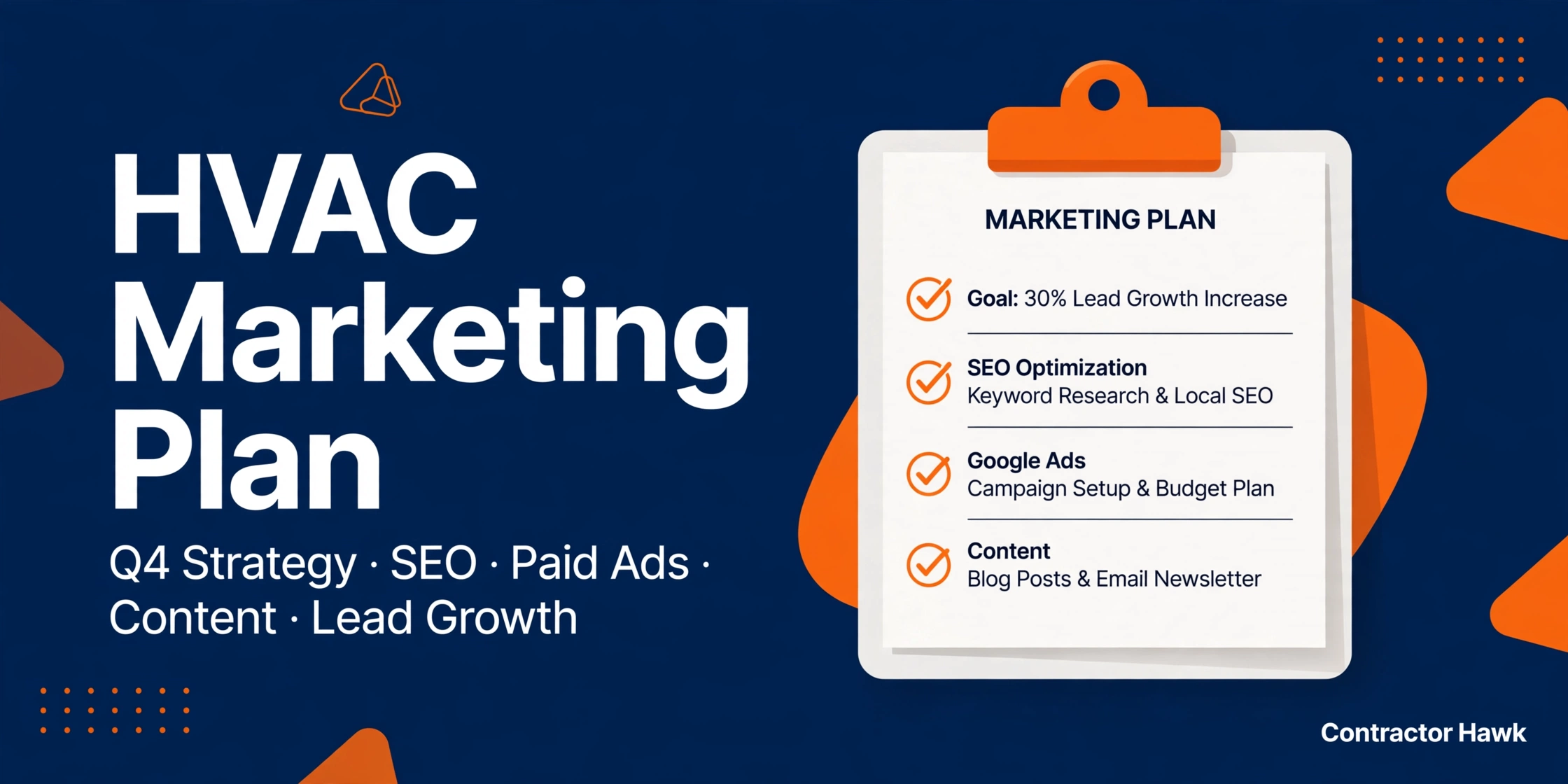
Your HVAC marketing budget works hardest when it matches your goal, your market, and your capacity. Start with a simple step by step marketing plan template, pick your number, and track every call. (Link planned, post not yet published.)
Get a free marketing audit. We will review your Google Business Profile, your website, and your current spend, and tell you what is costing you calls. Start your free audit.
Our ongoing plans come with a simple promise: “10 new customers in 60 days, or your third month is free.” See the terms. This applies to ongoing monthly plans. Exact terms are confirmed in writing.