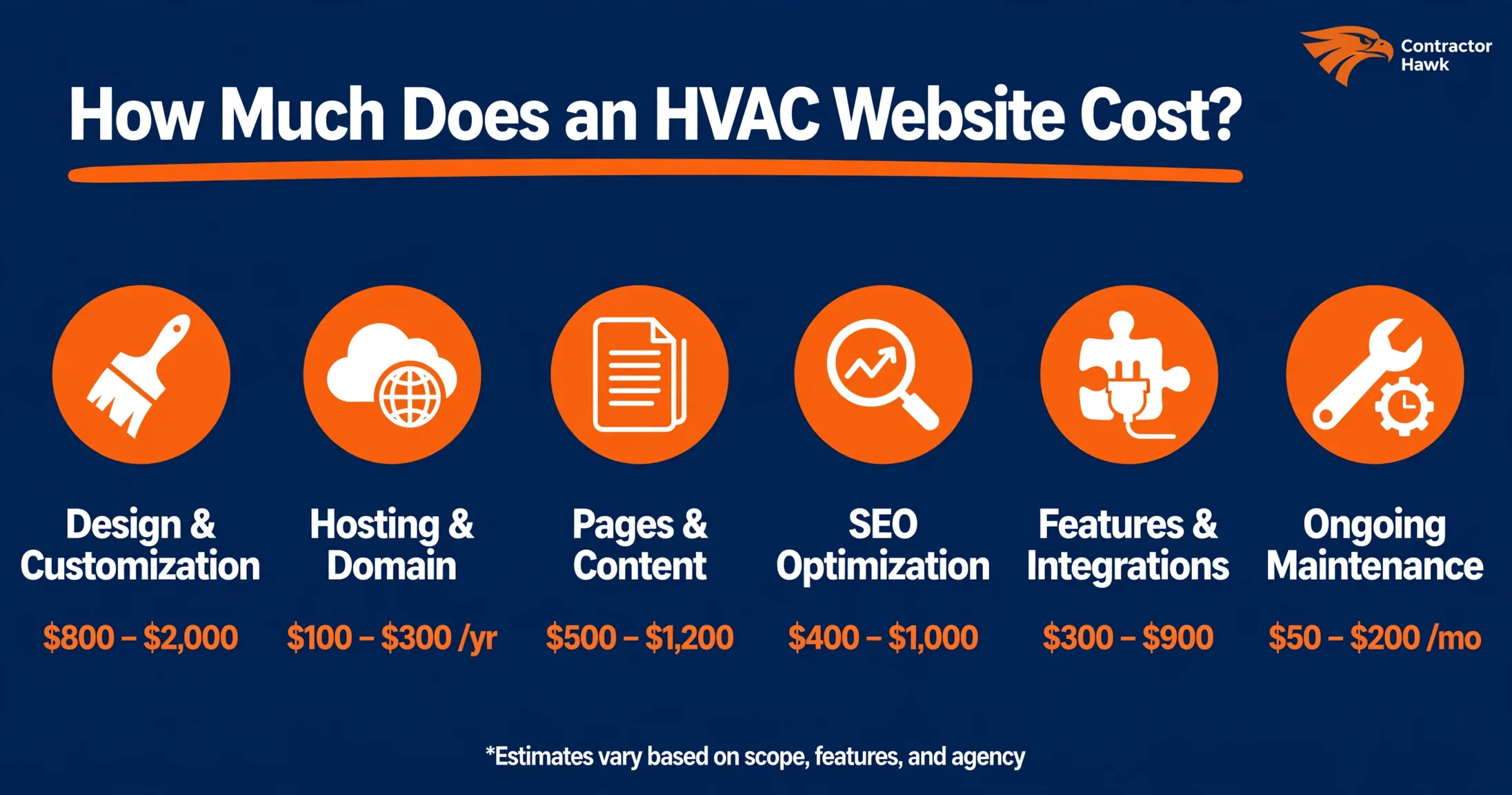
How much does an HVAC website cost? A simple one page site can cost under a thousand dollars. A custom built site with dozens of pages can cost well over ten thousand.
These are typical ranges, and your market and needs will move them. What you should do: decide what the site must earn, then buy the simplest site that can earn it.
A website is worth the money when it turns searches into booked jobs. It is not worth much when it only looks nice.
Quick answer: what do I do, and is it worth my money?
- What to do: Get two or three written quotes for the same scope. Ask who owns the site and the domain. Compare line by line before you sign.
- Is it worth it: Yes, when the site books jobs. A fast site with a clear phone number can pay for itself many times over. A site nobody finds is just an expense.
Table of contents
- How much does an HVAC website cost?
- The 6 factors that move your quote
- How to compare two quotes fairly
- Red flags in cheap website offers
- When a simple site is enough
- Mistakes contractors make
- Frequently asked questions
How much does an HVAC website cost?
Most HVAC websites fall into three bands. A basic template site typically costs from a few hundred dollars to about two thousand. A mid size custom site typically costs from two thousand to about eight thousand.
A large custom build can pass ten thousand. These are typical ranges, and your market and scope will move them.
You do not need a national average. You need to know what drives your quote. The next section breaks the price into six parts you can control.
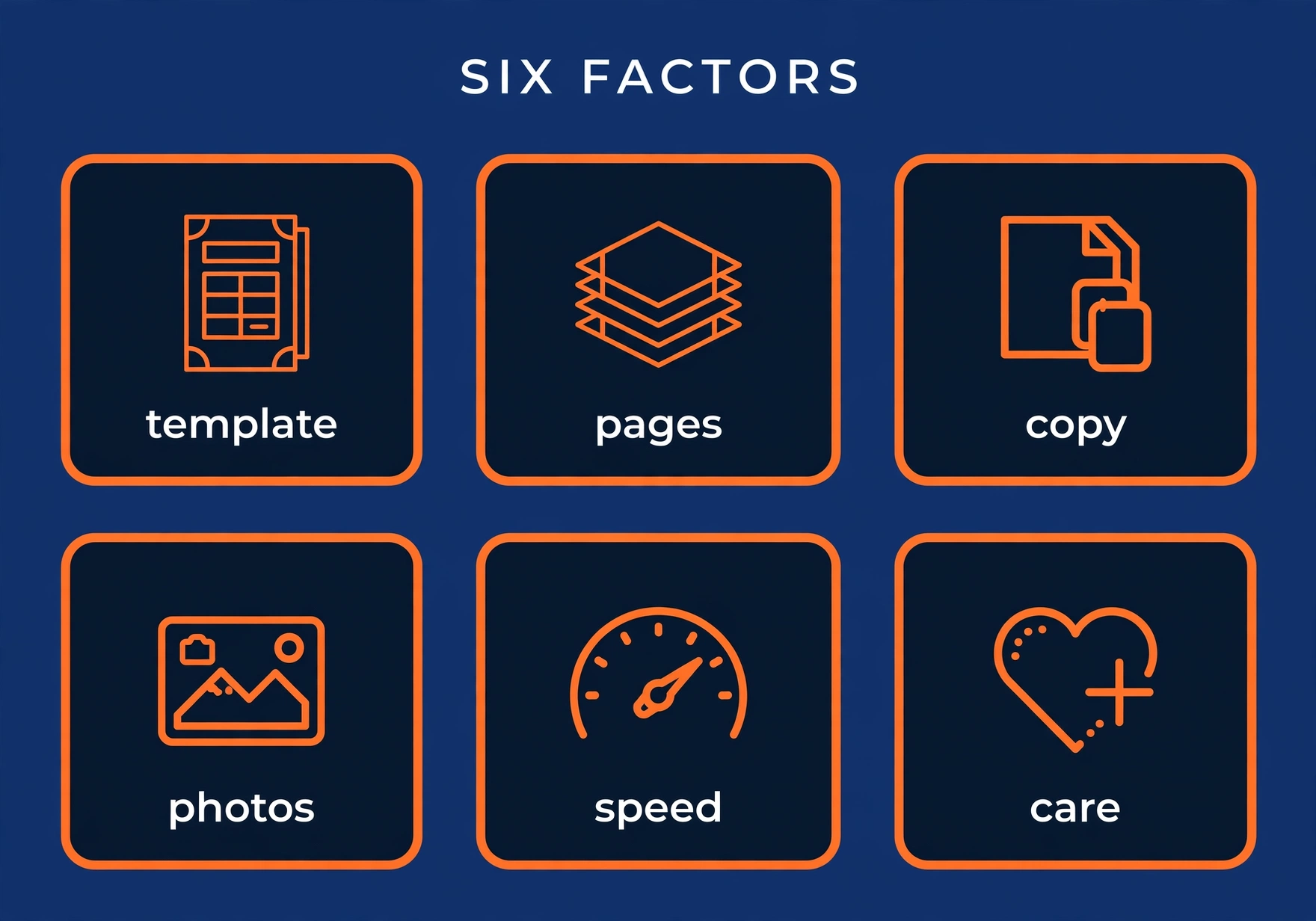
The 6 factors that move your quote up or down
Every quote is built from the same parts. Learn the parts and no quote can confuse you.
1. Template or custom design
A template starts from a pre built layout and changes the colors, logo, and text. It costs less and launches faster. A custom design is drawn for your company alone.
It costs more because a designer builds every page from zero. For most HVAC companies, a clean template with strong copy beats a pretty custom site with weak copy.
2. How many pages you need
A starter site has five to eight pages: home, services, about, reviews, and contact. A bigger site adds a page for each service and each town you serve.
More pages mean more writing, more building, and more cost. Only pay for pages that can bring calls.
3. Who writes the words
Words sell the job, not the design. If you write the copy, you save money but spend your evenings typing.
If the builder writes it, you pay more but the pages read better and match what customers search. Ask to see writing samples before you agree.
4. Photos and video
Stock photos of models in hard hats are cheap and forgettable. Real photos of your trucks, your techs, and your work build trust fast. A half day photo shoot adds cost.
It also makes every page feel real. Ask for a quote with and without real photos, then decide.
5. Speed, mobile, and the basics
Your site must load fast, work well on a phone, and use HTTPS. This is not an upgrade. This is the job.
Google’s page experience guidance lists mobile display, speed, and secure pages as the marks of a good site. If a quote skips these, it is not a real quote.
6. Ongoing care and hosting
Websites need care after launch: software updates, backups, and small text changes. Some builders bundle this into a monthly plan. Others charge per change.
Ask what the monthly fee covers and what counts as extra. A cheap build with a costly care plan is not cheap.
How to compare two quotes apples to apples
Never compare the bottom line first. Compare the line items. Two quotes at very different prices often describe very different jobs.
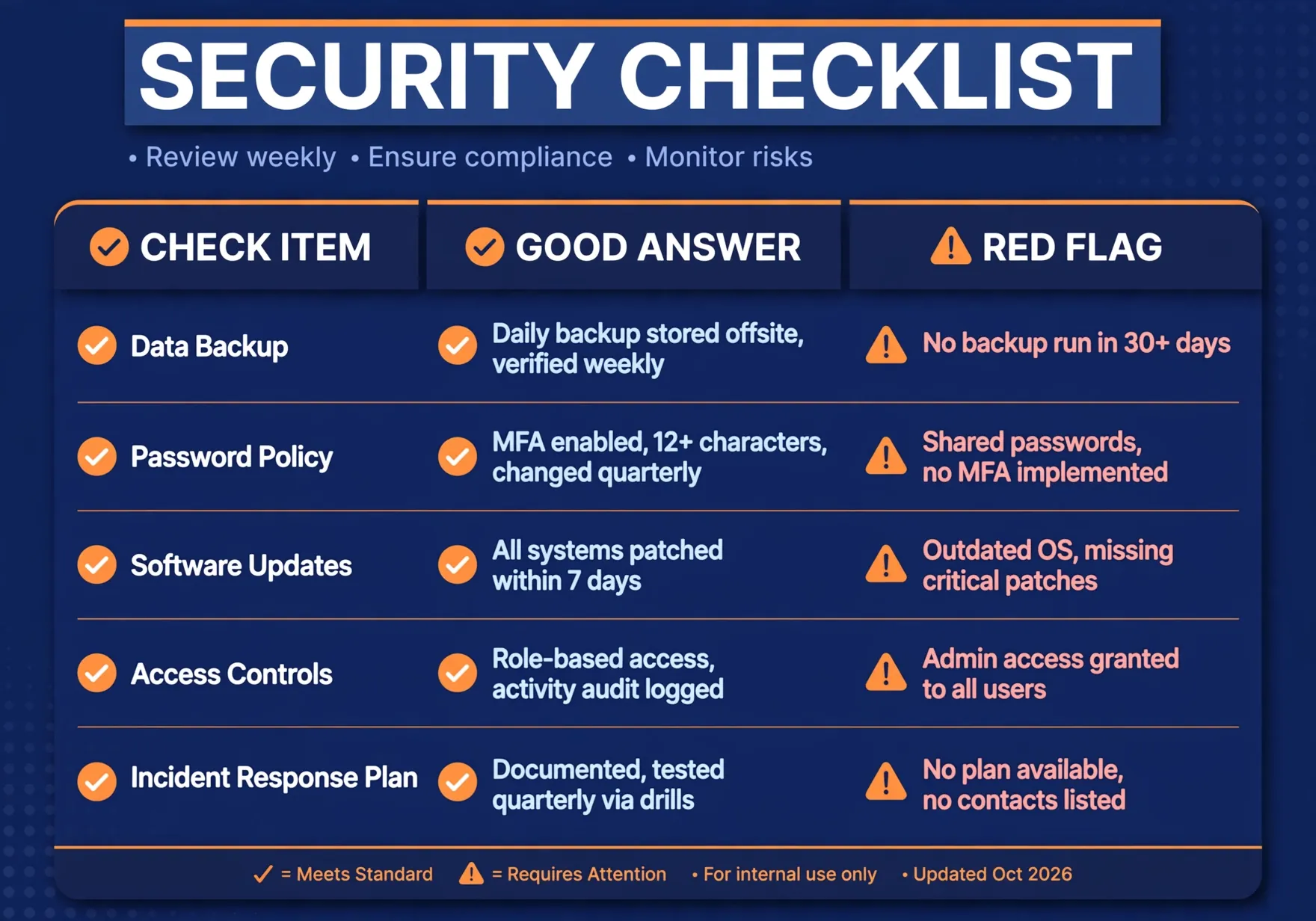
Use this checklist on every bid. Fold the build cost and the monthly care into your HVAC marketing budget so the full year cost is visible.
| Check this | Good answer | Red flag |
|---|---|---|
| Who owns the domain | You do, in your account | Builder holds it for you |
| Who owns the site files | You do, full access | You rent them monthly |
| Number of pages included | Listed by name | Vague page count |
| Who writes the copy | Named writer, samples shown | You write it all |
| Photos included | Real shoot or clear stock plan | No photos mentioned |
| Mobile design | Designed phone first | Desktop only demo |
| Load speed target | Tested before launch | Not mentioned |
| HTTPS security | Included free | Charged as an extra |
| Google Business Profile link | Site links to your profile | No local links planned |
| Monthly fee and what it covers | Itemized list | Fee with no detail |
| Contract length and exit terms | You can leave with your site | Long lock in, site stays with them |
Print this table and fill one column per bidder. The best quote is the one with the most good answers, not the lowest number.
Red flags in cheap website offers
A low price is fine when the scope is small. A low price is a trap when the terms are bad. Watch for these.
- A rented site you do not own. You pay monthly and the site dies the day you stop. You built nothing. Ask for ownership in writing.
- Locked in hosting. You cannot move the site to another host or builder. Leaving means starting over. Good builders let you leave with your files.
- A template sold as custom. You paid for original design and got a layout sold to fifty other companies. Ask to see the starting template before work begins.
- No access to your own domain. The builder registered your domain in their account. If you fight, they hold your web address. Register it yourself.
- A monthly fee with no end and no list of work. You pay forever and cannot name what you get. Every fee needs an itemized list.
- No written scope. The quote says website and nothing else. Pages, words, photos, and timeline must be on paper.
When a simple site is enough and when to invest
Not every company needs the big build. Match the site to your stage.
| Your situation | Simple site fits | Invest more |
|---|---|---|
| New company, one truck | Yes, start lean and upgrade later | No |
| Most work from referrals | Yes, the site just needs to look legit | No |
| Competing in a big city | No | Yes, you need service and area pages |
| Running Google Ads to the site | No | Yes, every click costs money |
| Growing to multiple crews | No | Yes, the site must sell while you work |
A simple site still needs the basics: fast, mobile friendly, clear phone number, real photos. When you are ready to grow the design, read our guide to HVAC website design for what turns visitors into callers.
Mistakes contractors make when buying a website
We see the same errors in site audits year after year. Avoid them and you save real money.
- Buying design before copy. A pretty site with weak words does not sell. Write or approve the words first, then design around them.
- Paying for pages nobody will visit. A blog nobody updates and a gallery nobody opens add cost, not calls. Every page needs a job.
- Ignoring the phone number placement. Customers on a phone need your number in one tap. If it takes three taps, you paid for a leaky bucket.
- Skipping speed testing. A slow site loses mobile visitors before they read a word. Test on a real phone, not just a fast office computer.
- Signing without exit terms. If the relationship sours, you need your site and domain. Read the exit clause before you need it.
A marketing team that works only with HVAC companies will tell you when a simple site is enough. That honesty is worth more than any design.
Frequently asked questions
How much should an HVAC company spend on a website?
Spend what the site must earn back. A small shop that lives on referrals can start with a simple site and upgrade later. A company buying Google Ads needs a faster, stronger site because every click costs money.
Match the build to the job it must do. Never buy features your customers will never use.
Can I build my own HVAC website to save money?
Yes, and for a brand new company it can be a fine start. Builders make it easy to get pages live fast. The tradeoff is time and quality.
Your pages may load slowly and read poorly on a phone. When calls grow, pay a pro to rebuild. Your time is better spent on jobs.
Why do two quotes for the same website look so different?
Because the scopes are rarely the same. One quote may include writing, photos, and speed work. The other may be design only, with you doing the rest.
Compare the line items in our checklist above, not the bottom line. Ask each bidder what is missing. The cheapest quote often leaves the most work to you.
Do I own my website if I stop paying the monthly fee?
Only if the contract says so. Some builders let you keep the site and move it. Others rent you the site, and it goes dark when you stop paying.
Always ask who owns the domain, the design files, and the content. Get the answer in writing before you sign. Ownership is the question that matters most.
How long does it take to build an HVAC website?
A simple template site can go live in one to two weeks when you supply text and photos fast. A custom site with many pages often takes four to eight weeks.
The biggest delay is usually the owner, not the builder. Photos, bios, and service lists sit in your inbox. Answer fast and the project stays on schedule.
A website is a tool, not a trophy. Buy the simplest one that can book jobs for your stage, own it outright, and upgrade when growth demands it.
Want a second pair of eyes on your current site or a quote you received? Request a free audit and we will tell you what is costing you calls.
Our promise: 10 new customers in 60 days, or your third month is free. See the terms.