Learning how to get HVAC customers is simpler than most marketing blogs make it sound. Homeowners call the company they find first and trust most.
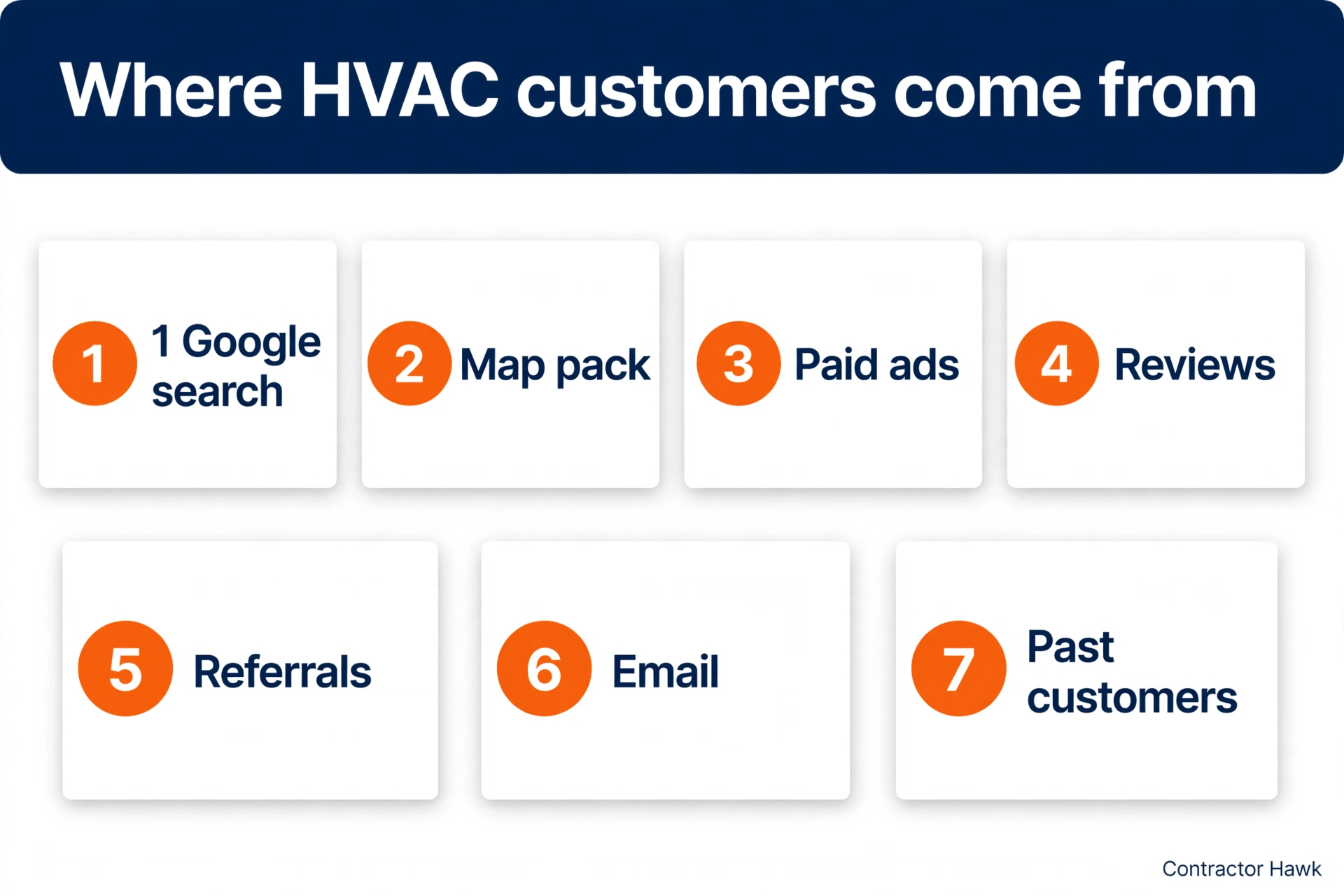
That means your job is to show up on Google, collect good reviews, and answer the phone. This guide walks through the seven channels that bring HVAC companies new customers, in the order you should tackle them. You will also see what each channel costs in money and effort, and which ones to skip.
The short answer: what do I do, and is it worth my money? Start with the free work.
Claim your Google Business Profile and ask every happy customer for a Google review. Put your phone number at the top of every page on your website.
Do these three before you spend a dollar. Paid ads are worth it only when you answer every call and track which calls turn into jobs.
Contents
- Where do HVAC customers actually come from?
- How to get HVAC customers: what to do first
- Start with your Google Business Profile
- Get found in search results with HVAC SEO
- Buy calls with Google Ads and Local Services Ads
- Turn happy customers into reviews and referrals
- Email your past customers
- What does each channel cost?
- What does not work
- Mistakes HVAC contractors make
- Frequently asked questions
Where do HVAC customers actually come from?
Most HVAC customers come from Google. They search for help, see the map pack and ads at the top, and call one of the first companies they trust. The rest come from reviews, referrals, and past customers who call again.
Your marketing job is to show up in these spots and make it easy to call.
The map pack is the box of three local businesses Google shows above the regular results. It runs on your Google Business Profile, your reviews, and how close you are to the searcher.
Below it sit the regular search results, where good HVAC SEO puts you. Above everything sit paid ads.
Think of it this way. Emergency calls come from Google.
Planned work, like system replacements and tune ups, comes from reviews, referrals, and email.
You need both kinds. One keeps the trucks rolling this week. The other fills next month.
How to get HVAC customers: what to do first
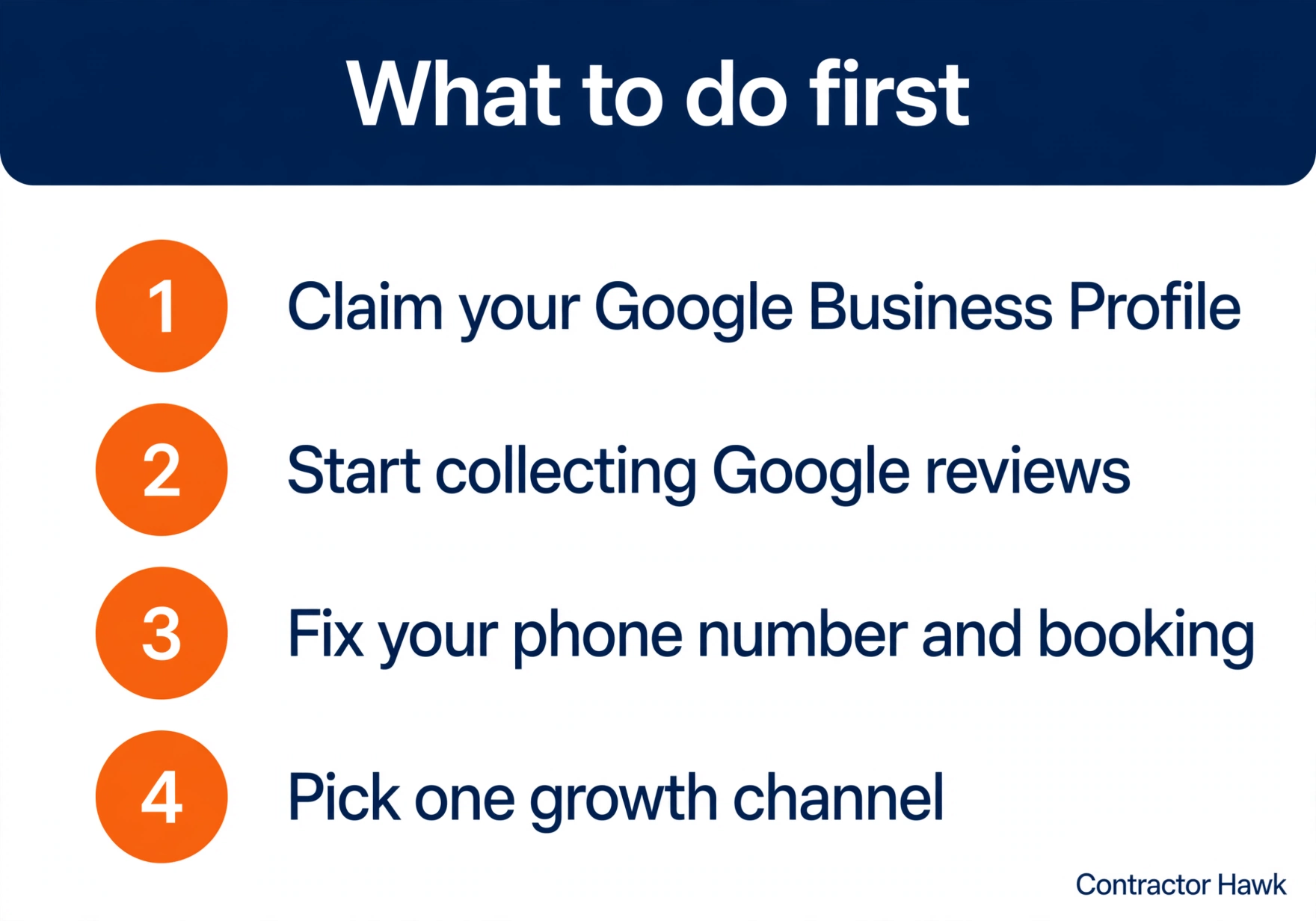
Do not try all seven channels at once. Work them in this order, and do not move to the next step until the current one is done.
- Claim your Google Business Profile. Fill in every field, add photos, and get verified. This is free and it is the single highest value hour in HVAC marketing.
- Start collecting Google reviews. Ask after every finished job. Reviews decide who gets the call when three companies look the same.
- Fix your phone number and booking. Put your number at the top of every page. Make it tap to call on phones. Answer every call, or send missed calls to someone who will.
- Pick one growth channel. Choose paid ads for speed or SEO for the long run. Run it for at least three months before you judge it.
Start with your Google Business Profile
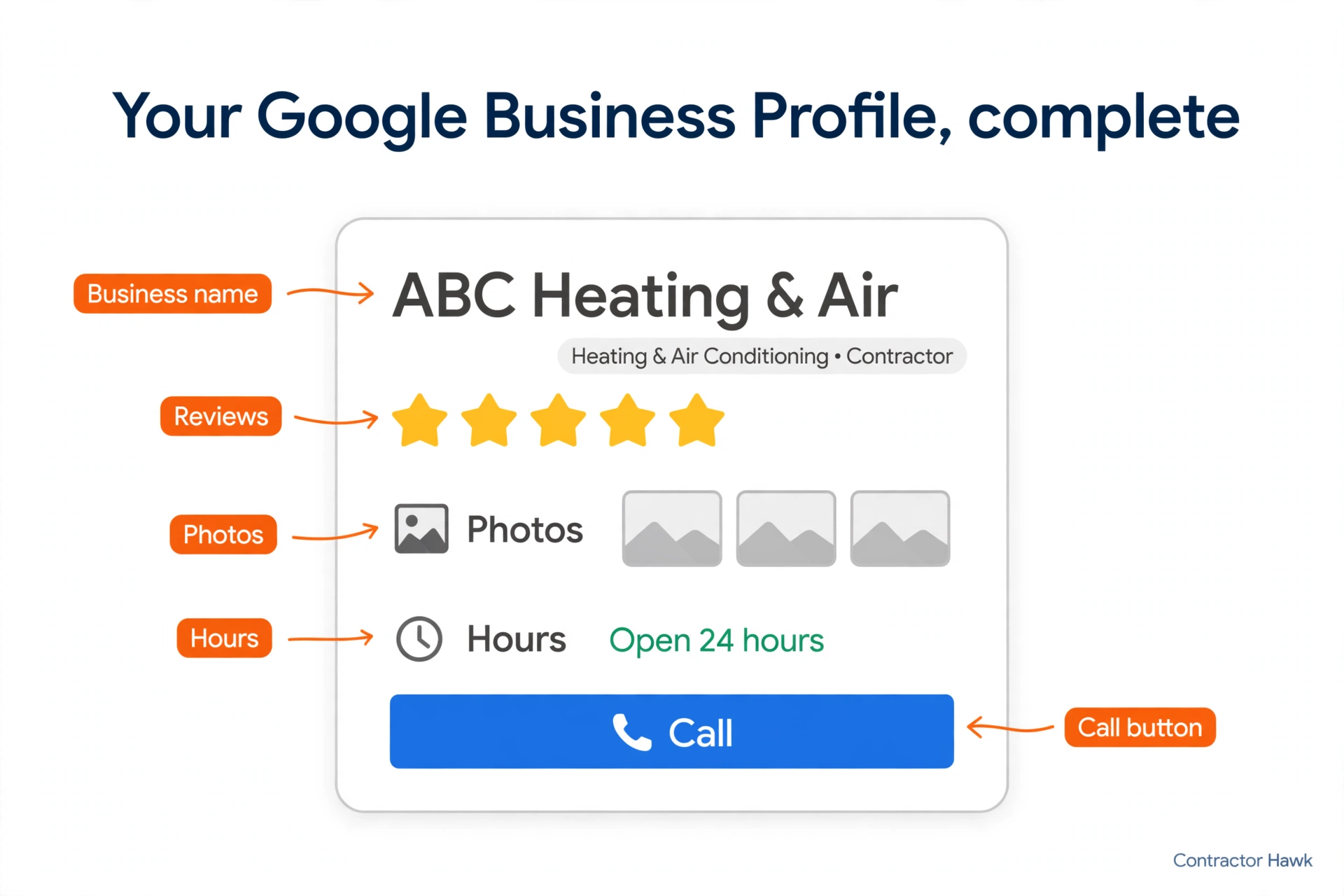
Your Google Business Profile is the free listing that controls how you look on Google Search and Google Maps. It shows your name, phone, hours, photos, and reviews.
Many customers decide to call you straight from this listing. They never visit your website.
You can add or claim your business at no charge through Google. If a listing already exists and you do not manage it, request ownership.
Then complete verification. Until you verify, your visibility stays limited.
External: Google’s own guide to adding or claiming your Business Profile.
What to fill in first
- Business name. Use your real business name. Do not stuff keywords into it.
- Category. Pick the closest primary category, then add the rest you truly offer.
- Service areas. List the towns you actually serve. Most HVAC companies hide their street address and serve an area instead.
- Hours. Keep them accurate, including holiday changes. Wrong hours lose calls.
- Services and products. List every service: AC repair, furnace install, tune ups, maintenance plans.
- Photos. Add real photos of your trucks, your techs, and finished work. Skip stock photos.
- Description. Write one plain paragraph about what you do and where.
Get found in search results with HVAC SEO
SEO means making your website show up in the free results when someone searches for HVAC help. It covers your service pages, your Google profile, your reviews, and the words homeowners actually type. Done right, it brings calls every month without paying per click.
The trade off is time. SEO takes months to build.
Google has to find your pages, trust them, and watch people click and call. But once it works, it keeps working while you sleep.
Paid ads stop the day you stop paying.
Read our complete HVAC SEO guide for the full process, from your profile to your service pages.
Buy calls with Google Ads and Local Services Ads
Google Ads put you at the top of search results fast. You pick the searches, you write the ads, and you set the budget.
You pay when someone clicks. Send those clicks to a page with a big phone number, not your homepage.
Local Services Ads work differently. They show your business card at the very top with your reviews and a call button.
You pay when someone contacts you through the ad, not for clicks. Google shows a Google Verified badge on these ads after you pass its checks.
Read Google’s explanation of the Google Verified badge to see what it requires.
External: Google’s overview of Local Services Ads and the pay per lead model.
Paid ads are worth it when three things are true. You answer every call.
Your website or profile turns visitors into callers. And you track which calls become jobs.
Without tracking, you are guessing. Learn the setup in our guide to HVAC Google Ads.
Turn happy customers into reviews and referrals
Reviews help you get HVAC customers in two ways. They push you higher in the map pack, and they win the call when a homeowner compares you with two other companies. A company with forty recent reviews beats a company with four old ones, even if the work is the same.
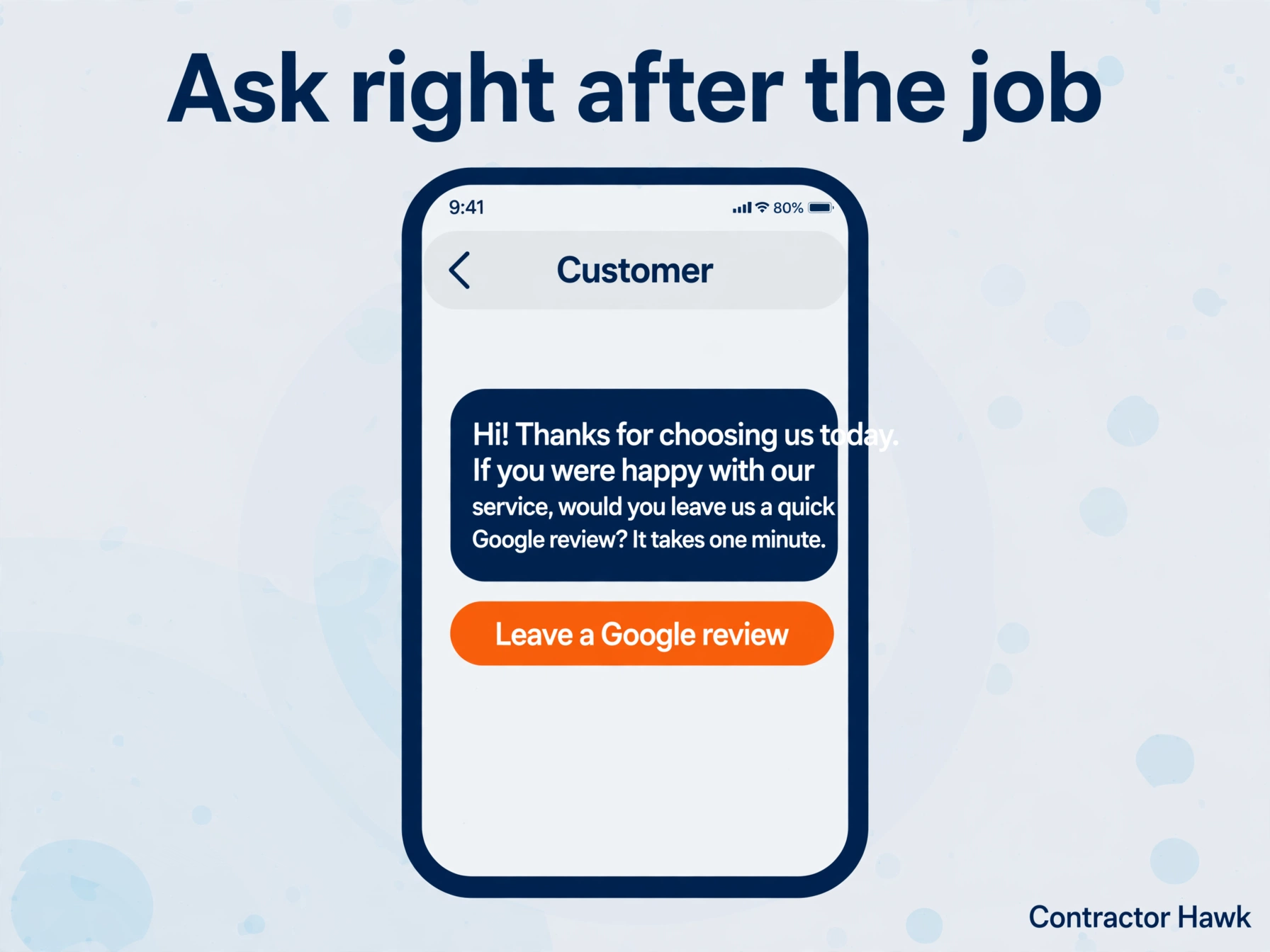
Build one habit. After every finished job, while the customer is happy, ask for a Google review and text them the link.
Make it easy. One tap should open the review form.
Then reply to every review, good or bad, within a day.
Referrals work the same way. Most happy customers will refer you if you simply ask.
Ask by name. For example: “Who nearby might need a tune up this spring?”
Specific beats vague.
Read how to get more Google reviews for message examples you can copy.
Email your past customers
Your cheapest new job is a past customer calling again. Email keeps you in front of them.
Send tune up reminders each spring and fall. Send filter reminders.
Send a slow season offer when the schedule has gaps.
Maintenance plans deserve their own emails. Remind plan members before each visit. Offer renewals a month before they expire. These emails protect steady income, which matters more than any single new customer.
Keep it simple. One useful email a month beats five sales pitches nobody opens.
Every email should have your phone number and one clear next step. Read our guide to HVAC email marketing for a full year of campaign ideas.
What does each channel cost?
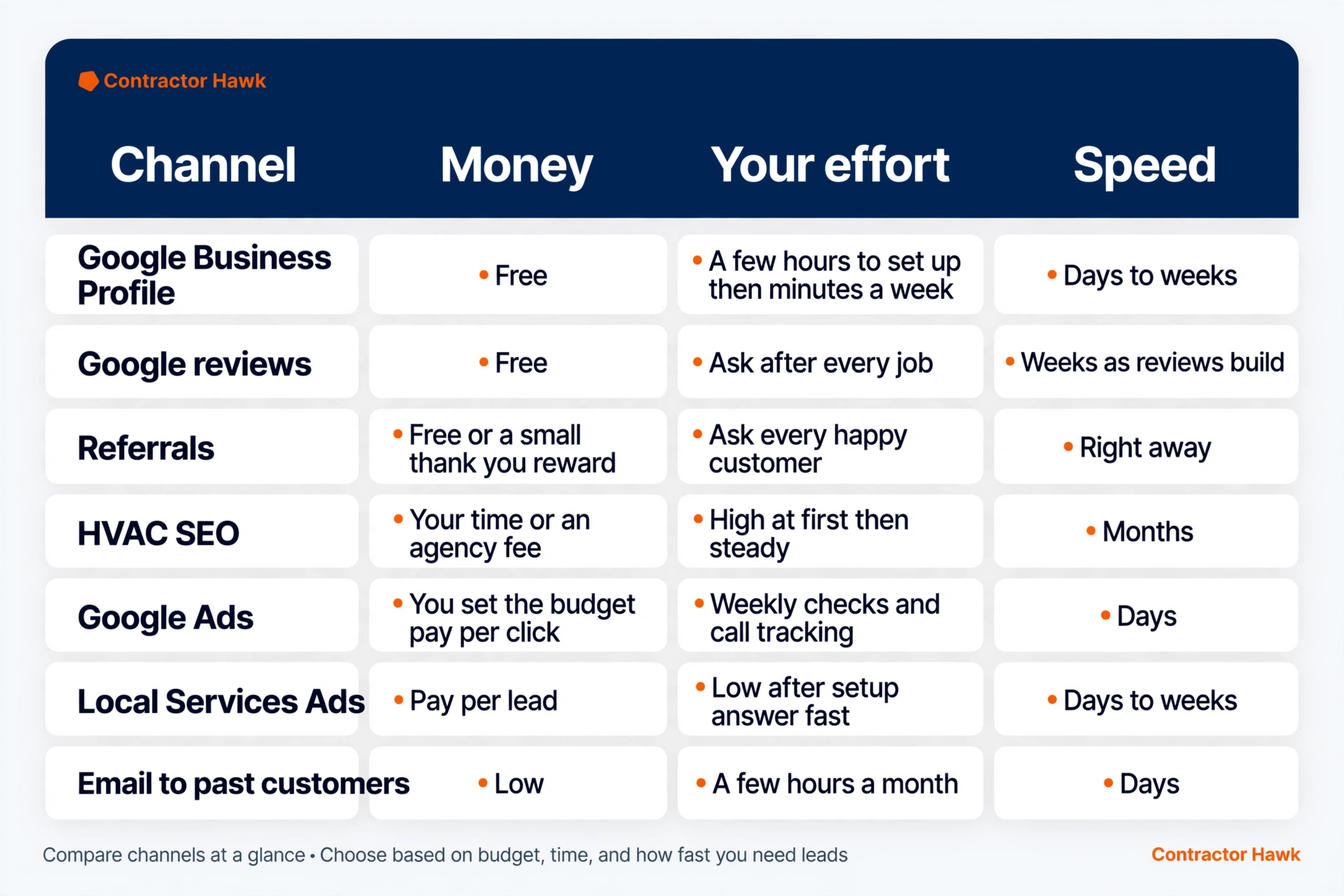
Every channel costs either money, time, or both. Use this table to plan. No channel is free of effort, and no paid channel works without someone answering the phone.
| Channel | Money | Your effort | Speed |
|---|---|---|---|
| Google Business Profile | Free | A few hours to set up, then minutes a week | Days to weeks |
| Google reviews | Free | Ask after every job | Weeks, as reviews build |
| Referrals | Free, or a small thank you reward | Ask every happy customer | Right away |
| HVAC SEO | Your time, or an agency fee | High at first, then steady | Months |
| Google Ads | You set the budget, pay per click | Weekly checks and call tracking | Days |
| Local Services Ads | Pay per lead | Low after setup, answer fast | Days to weeks |
| Email to past customers | Low | A few hours a month | Days |
Notice what the free channels have in common. They cost time and consistency, not money.
Most contractors skip them because they feel slow. That is exactly why they work for the ones who do them.
What does not work
An honest word on what to skip. Buying shared leads sounds easy, but most sellers hand the same lead to three or four contractors. You end up racing to the phone, and the price only looks cheap until you count the ones you lose.
Boosting random Facebook posts rarely brings repair calls. A pretty website with no traffic brings zero calls.
And any company that promises you first place on Google is selling something Google itself does not sell.
Marketing takes work. Anyone who says otherwise is after your signature, not your growth.
Learn where HVAC leads come from and which ones actually pay off before you buy anything.
Mistakes HVAC contractors make
- Missing the call. A homeowner with no AC calls three companies and hires the one that answers. Every missed call is a customer you paid to reach and then gave away.
- No review habit. Techs finish great jobs and drive off without asking. Six months later the profile still shows eleven reviews and the competitor shows eighty.
- Sending ad clicks to the homepage. A homeowner searching for furnace repair lands on a generic page and leaves. Match the page to the search.
- Setting up the profile once and forgetting it. Hours go stale, photos get old, questions sit unanswered. Google notices, and so do customers.
- Quitting a channel after three weeks. SEO and reviews need months. Judge paid ads after real call data, not after a slow Tuesday.
- Changing everything every month. Pick your channels, work them, and measure. Constant switching means nothing ever gets good.
Frequently asked questions
What is the fastest way to get HVAC customers?
The fastest way is Local Services Ads or Google Ads, paired with a complete Google Business Profile. Ads can bring calls within days of launch.
The profile matters because most callers check your reviews before they dial. Answer every call.
A fast channel with slow follow up still loses jobs.
How can I get HVAC customers for free?
Claim and complete your Google Business Profile, ask every happy customer for a Google review, and ask for referrals by name.
Keep your phone number visible on every page of your website. These cost nothing but your time.
They are also the channels customers trust most, so they keep working year after year.
Should I buy HVAC leads from lead generation websites?
Be careful. Most lead sellers share each lead with three or four contractors, so you race to the phone.
Track how many bought leads turn into booked jobs before you spend more.
For many shops, that money works harder in Google Ads or Local Services Ads, where the caller chose you, not a list.
How long does HVAC SEO take to work?
Expect months, not days. Google needs time to trust your site and your reviews.
Most contractors see movement in three to six months when the basics are done right.
The payoff is that organic calls keep coming without paying per click. Read our complete HVAC SEO guide for the full process.
Do Facebook ads work for HVAC companies?
They can help with name recognition, but they rarely beat Google for emergency calls. Nobody scrolls Facebook when the AC dies.
They search Google. Use Facebook ads for tune up offers and maintenance plans in slow months.
Keep most of your budget where buyers already look.
What is HVAC customer acquisition?
Customer acquisition is the process of turning strangers into paying customers. For an HVAC company, it covers every channel in this guide: your Google profile, search results, ads, reviews, referrals, and email.
Track what each new customer costs you per channel, then put more money into the ones that book jobs.
Start with the free channels this week. Fix your profile, ask for reviews, and make your phone number impossible to miss. If you would rather have help with all of this, a marketing partner that works only with HVAC contractors can run it for you.
Want a second pair of eyes on your marketing? We will review your Google profile and website for free and tell you what is costing you calls. Get your free audit.
The Contractor Hawk promise: 10 new customers in 60 days, or your third month is free. Read the terms.