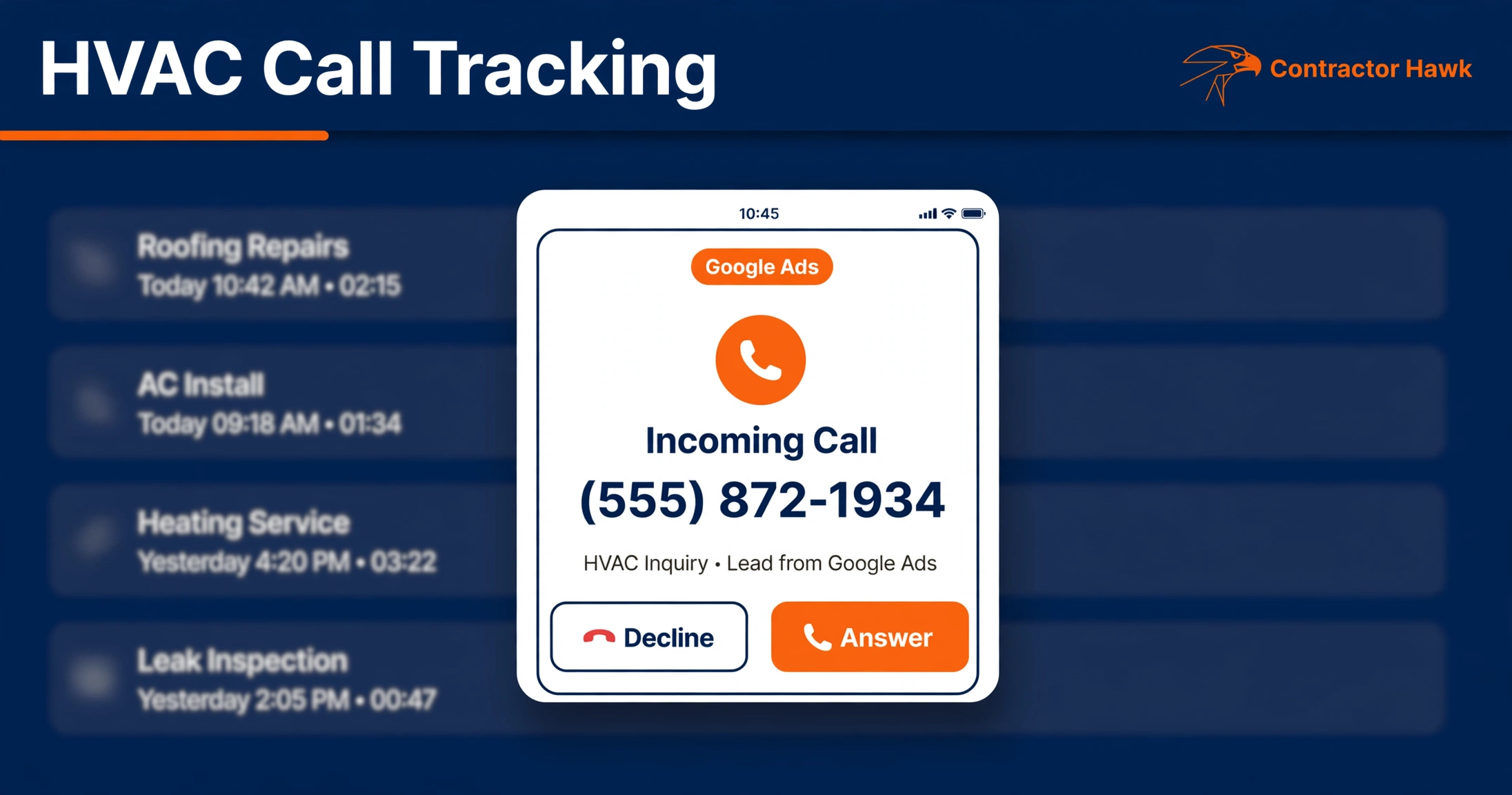
HVAC call tracking tells you which ad made your phone ring. It gives each channel its own phone number, and every number forwards to your main line. When a customer calls, you know where they came from.
Most HVAC jobs start with a call, not a form. Without tracking, you are guessing which ads pay you back. This guide shows what call tracking is, what to look at, and what it costs.
Quick answer: what do I do, and is it worth my money?
- What to do: Give each ad channel its own tracking number that forwards to your main line. Review the call report weekly, listen to a few recordings, and coach your team on the missed calls.
- Is it worth it: Yes. Most HVAC jobs start as phone calls. If you cannot tie calls to their source, you cannot know which ads earn money and which ones waste it. Tracking turns guessing into math.
Table of contents
- How HVAC call tracking works
- Why calls matter more than clicks for HVAC
- What to look at in your call reports
- Dynamic number swapping, explained simply
- What does call tracking cost
- Your call tracking setup checklist
- Mistakes HVAC owners make with call tracking
- Frequently asked questions
How HVAC call tracking works
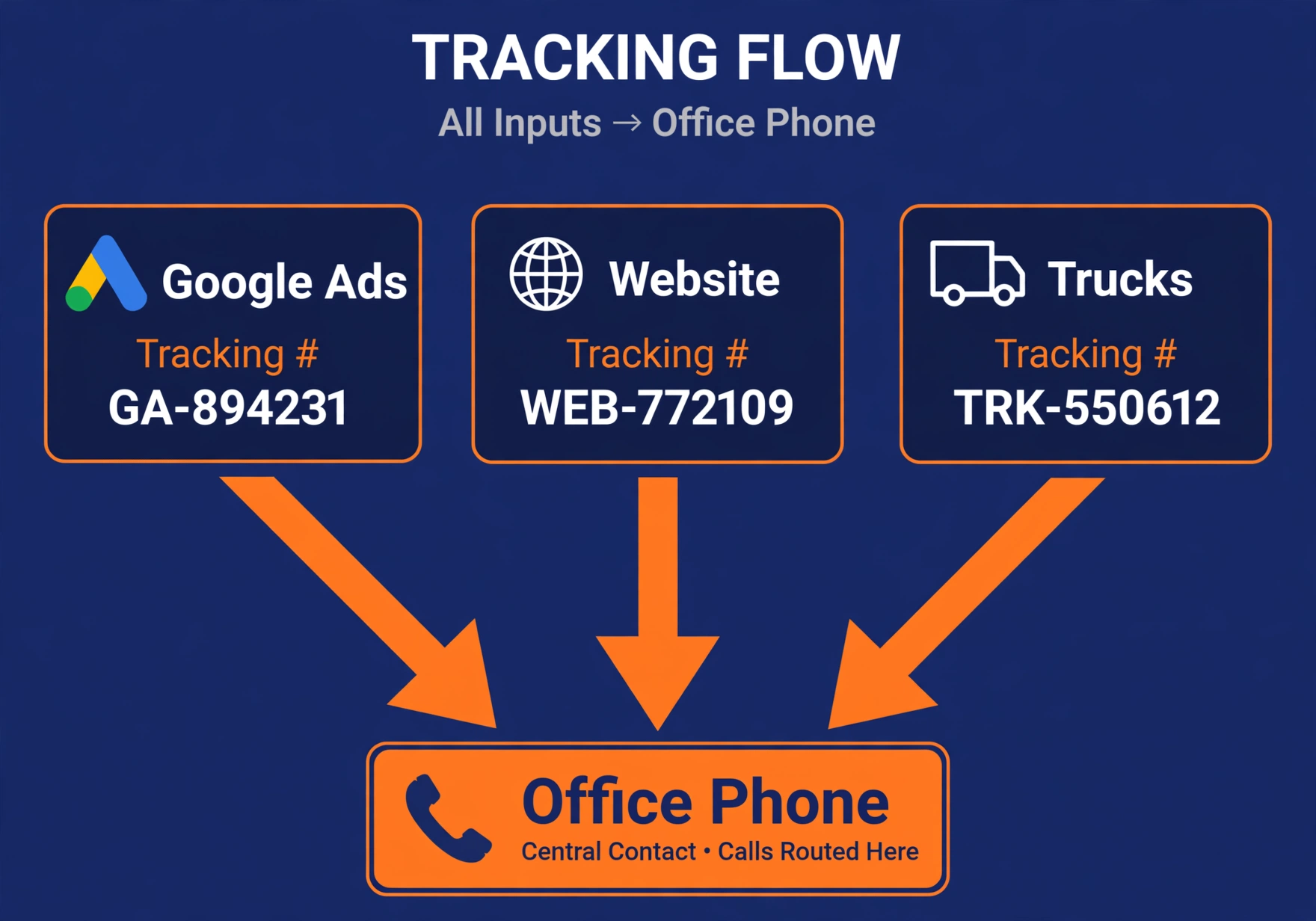
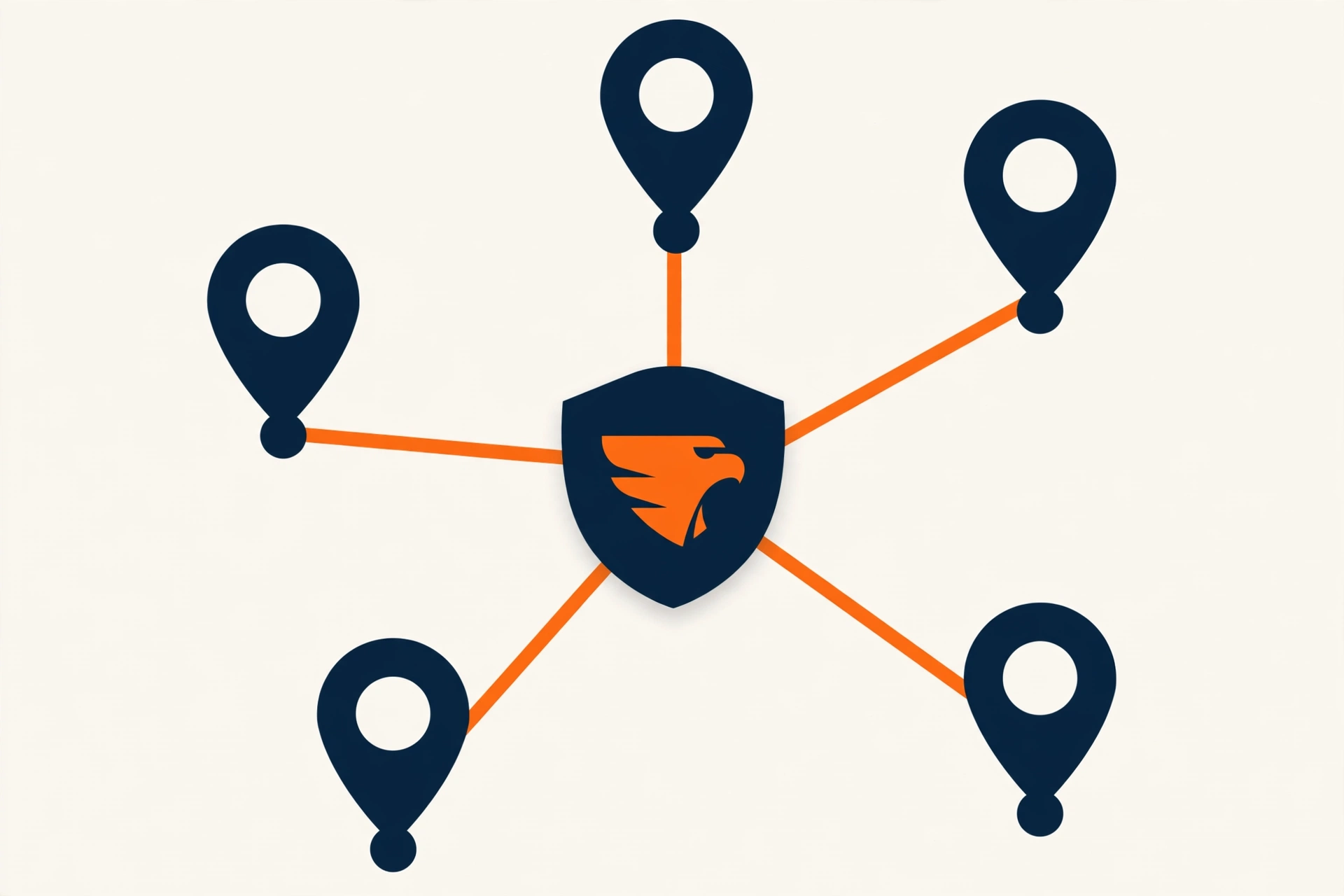
HVAC call tracking gives each marketing channel its own phone number that forwards to your main line. Google Ads, your website, and your trucks each get their own number. When the phone rings, the system logs which number was dialed, so you see exactly which channel brought the call.
The caller notices nothing. They dial the number they saw and reach your office like normal. On your side, the report shows the source, the time, the length, and often a recording.
You need no new phone lines or hardware. The numbers live in software and forward to the line you already answer. Start with the channels that spend the most money.
Why calls matter more than clicks for HVAC
Think about your own customers. The AC dies at 9 pm on a Friday. Nobody fills out a form and waits for Monday. They search, they tap the call button, and the first shop that answers wins the job. That is why clicks alone lie to you. A click is interest. A call is intent.
Most HVAC jobs follow the same path. A homeowner searches, calls two or three shops, and books the one that answers fast and sounds capable. If you only track form fills, your reports look quiet while your phone stays busy, and you never learn which ad caused it.
Call tracking ties the ad to the call to the booked job. Then you can answer the only question that matters: which channel brings jobs that pay, and which one brings noise. See what marketing results to expect once those calls start flowing.
What to look at in your call reports
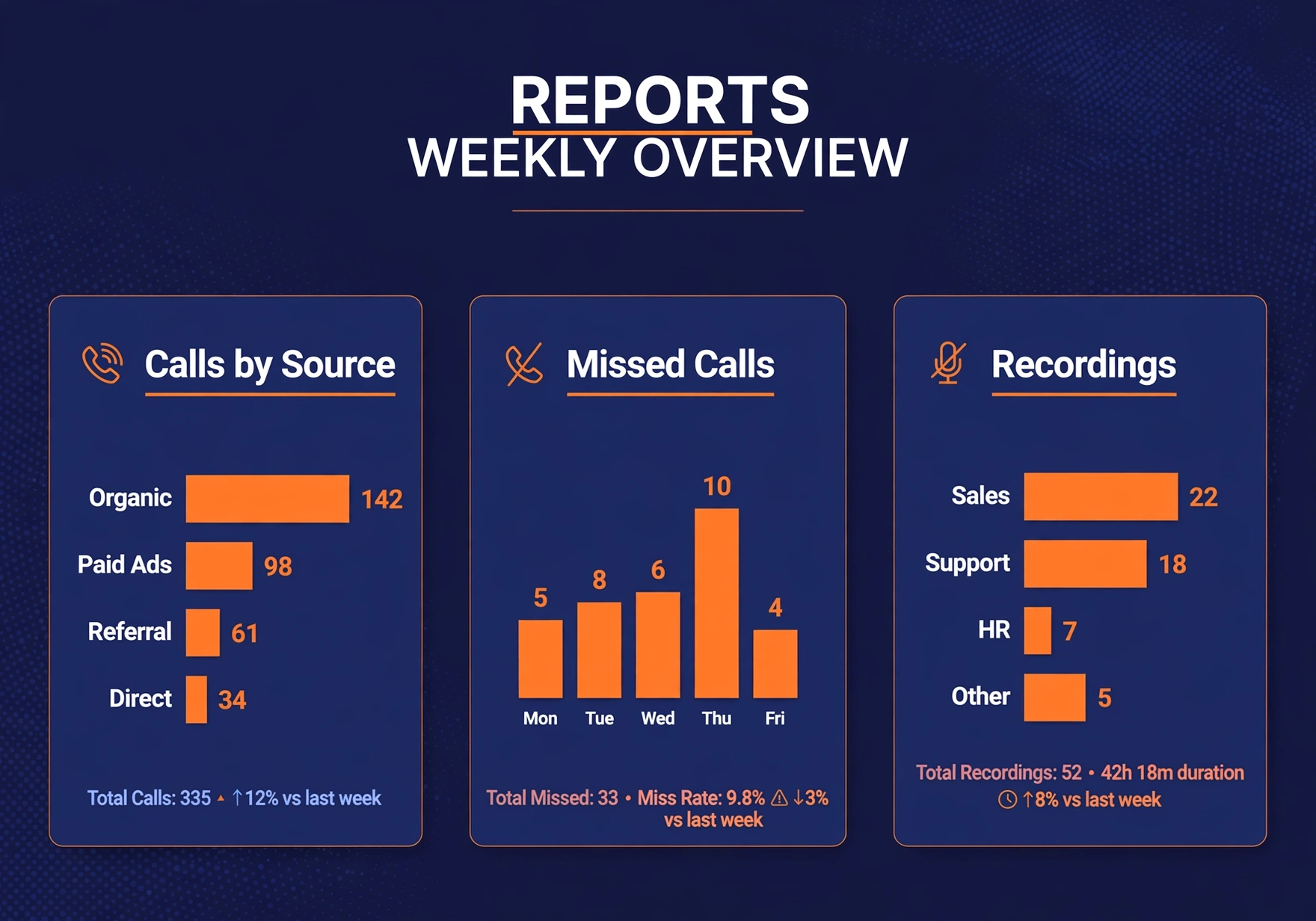
Open the report once a week and look at these four things.
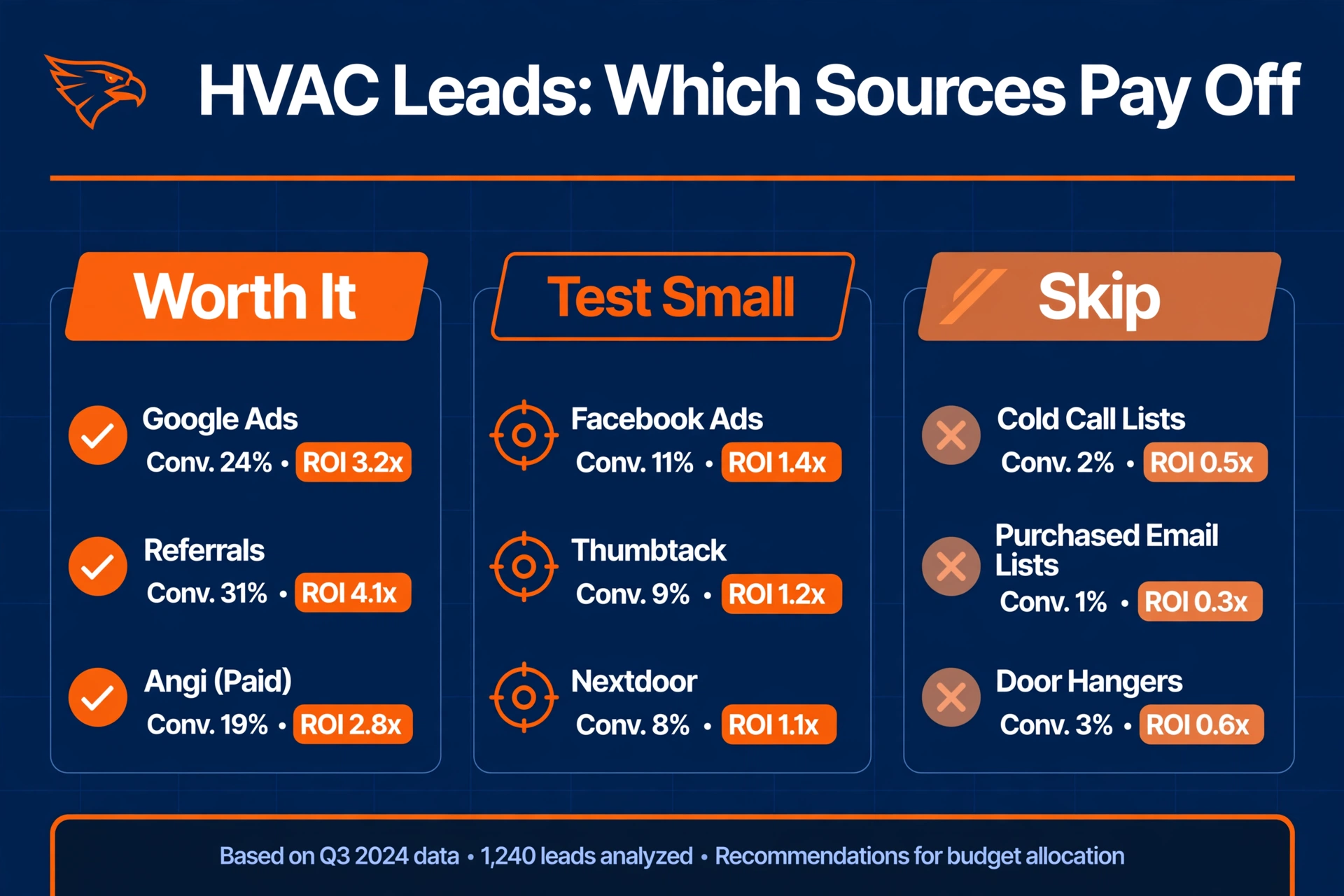
Calls by source. This is the big one. How many calls came from each channel. Rank channels by calls that turned into booked jobs, not by total calls. Ten calls that book six jobs beat thirty calls that book two.
Missed calls. Every missed call is a job that went to a competitor. Check when they happen. If most land after 6 pm, you have a coverage problem, not a marketing problem. An HVAC answering service can catch those after hours calls. Fix the answering before you spend more on ads.
Recordings for coaching. Listen to ten to fifteen calls a week and look for patterns. Do your people answer fast, quote clearly, and ask for the job? Coach the pattern, not the person. One note: before you record any calls, check your local call recording consent rules. Each state has its own rules.
Call length and timing. Very short calls are often wrong numbers or price shoppers. Long calls with no booking often mean the quote scared them or nobody asked for the job. The pattern tells you what to fix on the phone.
Dynamic number swapping, explained simply
Dynamic number swapping sounds technical. It is not. Your website shows a different phone number to each visitor, based on how they arrived. A visitor from Google Ads sees number A. A visitor from a Facebook ad sees number B. Both numbers forward to your office.
Why does this matter? It tells you which keyword made the phone ring. The system logs the search term next to the call. You learn that “AC repair” books jobs while “AC maintenance tips” only brings questions. That detail lets you cut losers and feed winners.
Inside Google Ads, the same idea runs under the name call reporting. Google places a forwarding number in your ads and on your website for ad visitors, then logs the call behind it. Google Ads Help documents the setup for phone call conversion tracking. If you run paid search, our guide to HVAC Google Ads shows how the call data fits the bigger picture.
What does call tracking cost
There is no honest single price. Most providers charge per tracking number per month, plus a small charge per minute of forwarded calls. Your cost depends on two things: how many numbers you run and how many calls flow through them. Most HVAC shops need only a handful of numbers, one per main channel.
Compare quotes on the same points. How many numbers the base plan includes. The per minute rate after that. Whether recordings and reports cost extra. Whether you can take your numbers with you if you leave. Providers price this differently, so line up two or three quotes side by side.
One more angle. Google Ads includes its own call reporting inside your ad account. It only tracks Google Ads calls, nothing else. If ads are your only channel, that may be enough. If you also want website and social calls tracked, a dedicated service pays for itself the first time it shows you a channel to cut.
| Option | Best for | Watch out for |
|---|---|---|
| Google Ads call reporting | Shops running ads only | Tracks Google Ads calls and nothing else |
| Dedicated call tracking for contractors | Shops running ads plus a website | Monthly fee on top of your ad spend |
| Ask and log it yourself | Very small budgets | Misses calls and relies on memory |
Your call tracking setup checklist
Set this up once and it runs in the background. Work through the list in order.
- List every place your number appears. Website, Google Business Profile, ads, trucks, yard signs, invoices. You need to know what you have before you change anything.
- Give each ad channel its own tracking number. Google Ads, your website, and social media each get one. Paid channels come first because they cost you money every day.
- Keep your real number on your Google Business Profile. Tracking numbers belong on paid ads and the website. Your main number stays where reviews and referrals already find you.
- Forward every tracking number to the line your team answers. Then test each one by calling it yourself. A tracking number that rings a dead line is worse than no tracking at all.
- Turn on recording only if your local rules allow it. Check your state call recording consent rules first. When in doubt, play a short “this call may be recorded” message to every caller.
- Review the report every week. Which channel brought calls? Which brought missed calls? Fix the worst problem first, then the next one. Small steady fixes beat one big overhaul.
Mistakes HVAC owners make with call tracking
These mistakes are common. We see them in almost every audit where the owner says the ads do not work.
- Using one number for everything. One number for ads, trucks, and the website tells you nothing. You still will not know which channel earned the call. Separate the numbers and the truth shows up.
- Never listening to the recordings. The report says fifty calls came in. The booking log says twelve jobs. The recordings tell you why. Listen to a few each week or the data is just decoration.
- Blaming marketing for a bad phone answer. The ad did its job. The CSR answered late, parked the caller on hold, and never asked for the job. Fix the phone before you fire the ad agency. A marketing partner that works only with HVAC companies will tell you this straight, because the numbers prove it.
- Judging a channel on too few calls. Ten calls is not a verdict. Give a channel enough calls to show a pattern before you move budget. Cutting a winner in week two is an expensive mistake.
- Putting the tracking number on the Google Business Profile. Keep your real number there. Tracking numbers change when you switch providers. Your main number is the one reviews and referrals know.
Frequently asked questions
Do I need call tracking if I only run one or two ads?
Yes, even more so. With a small budget, one bad ad wastes a big share of your money. Call tracking shows which of your two ads earns calls. Keep the winner and fix or pause the loser. Without it, you judge both on gut feel. Small budgets need clear answers, not guesses.
Will a different phone number confuse my customers?
No. Customers dial the number they see and reach you like normal. The swap happens behind the scenes. Keep your main number on your Google Business Profile and on printed materials so reviews and referrals still find you. Tracking numbers are for ads and the website only, so nothing familiar changes.
Should I listen to every call recording?
No. Listen to a small sample each week, maybe ten to fifteen calls. Look for patterns, not single mistakes. Do your people answer fast, quote clearly, and book the job? Coach the pattern and the numbers move. Before you record, check your local call recording consent rules. Some places need every party to agree.
What is the difference between call tracking and an HVAC answering service?
Call tracking tells you which ad rang the phone. An HVAC answering service picks up the phone when you cannot. They solve different problems. Tracking answers “where did this lead come from.” Answering answers “who caught the call at 8 pm.” Many shops use both. Missed calls are lost jobs, so coverage matters too.
Can call tracking show which keyword made the phone ring?
Yes, with dynamic number swapping on your website. A visitor who searched “AC repair” sees a different number than a visitor who searched “furnace install.” The system logs the search term with the call. Inside Google Ads, call reporting shows this too. You learn which searches buy, not just which ones click.
Start with one tracking number on your biggest ad channel. Review the calls each week and move budget to what rings. Want a second pair of eyes on your setup? Request a free audit and we will show you where your calls really come from.
Our promise: 10 new customers in 60 days, or your third month is free. See the terms.