When your AC dies at 7 pm on a July night, you do not search for “residential cooling solutions.” You type “AC repair near me” and call the first company that looks real.
HVAC keywords are simply the words and phrases homeowners type into Google when they need heating or cooling help. This guide shows you the three groups that matter, how to find yours free, and which ones deserve their own page on your site.
The short version:
- HVAC keywords are the phrases homeowners type when they need heating or cooling help.
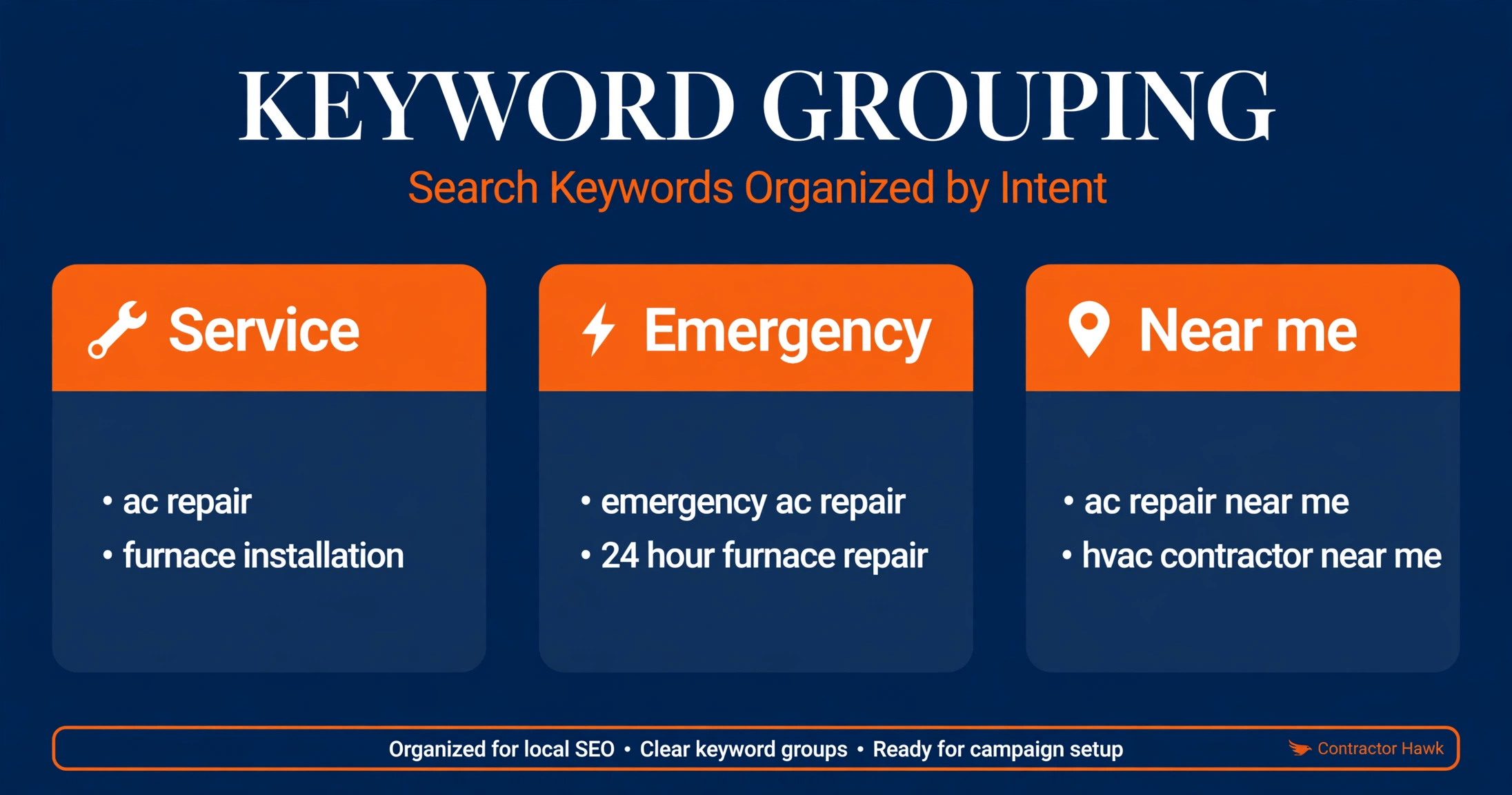
- Three groups matter most: service searches, emergency searches, and near me searches.
- Find yours free with Google autocomplete, the People Also Ask box, and Keyword Planner.
- Give each service and each emergency search its own page. That is what makes the phone ring.
What this guide covers:
- What are HVAC keywords?
- The three keyword groups that matter
- How to find your keywords free
- Which keyword groups deserve their own page
- Question keywords: what homeowners ask
- Mistakes contractors make with keywords
- HVAC keyword questions, answered
What are HVAC keywords?
HVAC keywords are the words homeowners type into Google when they need heating or cooling work. Service searches like “furnace repair” bring steady jobs. Emergency searches like “AC not cooling” bring urgent calls.
Near me searches like “HVAC company near me” bring local buyers. Your website needs pages that match each group.
A keyword is just a phrase with a job behind it. The job is what matters. Someone typing “AC repair” wants a fix.
Someone typing “AC repair near me” wants a fix from a company close by, today. Google says to think about the words your readers would actually search for, then write with those readers in mind.
That is the whole game. You do not need fancy software to start. You need to think like a homeowner with a broken system.
This matters because Google matches searches to pages. If no page on your site talks about “furnace installation” in plain words, Google will send that searcher to a competitor.
Our complete HVAC SEO guide explains how those pages work together. Keywords are the starting point. Pages are where the calls come from.
The three keyword groups that matter
Forget long lists of hundreds of phrases. Almost every search that brings you work falls into one of three groups. Learn the groups and you can judge any keyword in seconds.

| Group | Example searches | Page it needs |
|---|---|---|
| Service | AC repair, furnace installation, heat pump maintenance | One page per service |
| Emergency | AC not blowing cold air, furnace stopped working, emergency HVAC repair | One strong emergency page with a big call button |
| Near me | HVAC company near me, AC repair Houston | Homepage and Google Business Profile |
Service searches are your bread and butter. The homeowner knows what they need. These searches happen all year and they convert well because the intent is clear.
Emergency searches are gold. The homeowner is uncomfortable right now. They will call the first company that answers.
These searches spike in summer and winter. Miss them and you miss your best jobs.
Near me searches show Google knows location matters. Google reads the searcher’s location and shows nearby companies.
Your Google Business Profile and local pages do the heavy lifting here. Keep them complete and current.
How to find your keywords free
You do not need paid tools to build a good list. Google gives you everything free. Set aside one afternoon and work through these steps.
- Type into Google and watch autocomplete. Open a private browser window. Start typing “AC repair” and stop before you finish. Google suggests the real phrases people type. Write them down. Try it with “furnace”, “heat pump”, and “thermostat” too.
- Read the People Also Ask box. Search one of your phrases and scroll to the questions Google shows. These are the exact questions homeowners ask. Each one is a future FAQ or blog topic.
- Use Google Keyword Planner. It is free inside Google Ads. Enter your best phrases and it shows keyword ideas plus monthly search estimates. Google’s own help page walks through it step by step: how to use Keyword Planner.
- Sort everything into the three groups. Take your list and put each phrase under service, emergency, or near me. Throw out anything that does not fit your work. A phrase you cannot serve is not your keyword.
- Start with buying intent. Emergency and service searches come first. Question phrases come later. A homeowner asking “how does a heat pump work” may call you someday. A homeowner typing “heat pump repair near me” calls today.

Which keyword groups deserve their own page
Here is where most contractors go wrong. They put every service on one page and wonder why Google ignores them. Google likes pages that answer one thing well.
Service group: yes, one page per service. AC repair gets a page. Furnace installation gets a page.
Tune ups get a page. Each page speaks to one need. This is the backbone of your site.
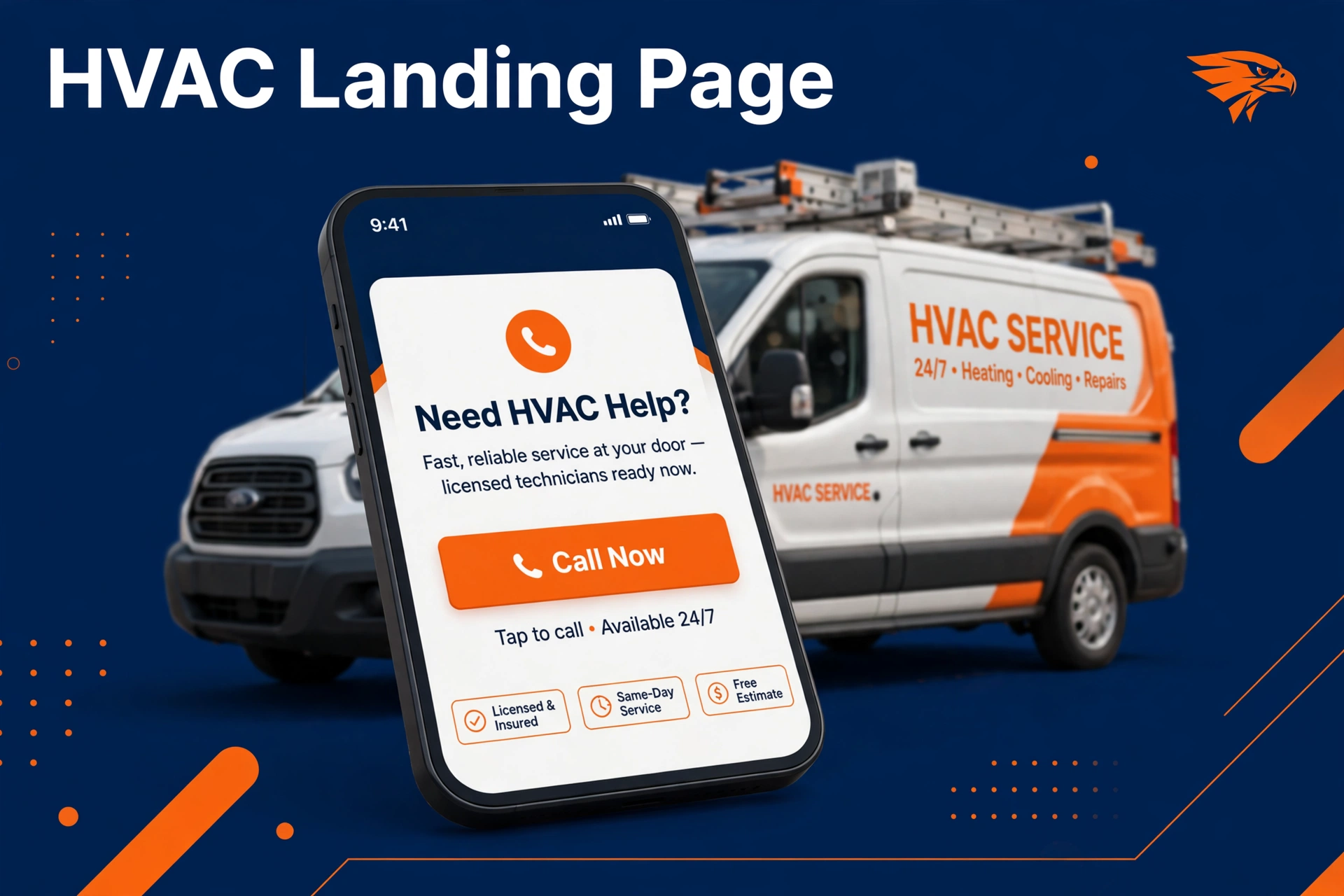
Emergency group: yes, one strong emergency page. This page needs a big call button, your hours, and plain words about fast response.
Our guide to HVAC landing pages that get more calls shows how to build it. One great emergency page beats five thin ones.
Near me group: your homepage and profile cover it. You do not need a page for every “near me” phrase.
Google attaches location on its own. Keep your homepage clear about where you work and keep your Google Business Profile complete.
Question phrases: answer them in FAQs, not new pages. “Why is my AC blowing warm air” does not need its own page.
Answer it in an FAQ section or a short blog post. These build trust and they feed the People Also Ask boxes.
Question keywords: what homeowners ask
Question keywords start with who, what, why, how, or how much. Homeowners ask them before they are ready to buy. They are still worth your time.
- Why is my AC blowing warm air? Answer it in your AC repair page FAQ.
- How often should I service my furnace? Answer it on your maintenance page.
- How much does AC repair cost? Answer honestly with the factors that change the price.
- What size AC do I need? Answer it in a short blog post and link to your install page.
Do not chase these first. Build your service and emergency pages first. Then add answers to questions.
Questions bring readers. Service pages bring callers. You need both, in that order.
Mistakes contractors make with keywords
We see the same five mistakes in almost every audit. They are easy to fix once you spot them.
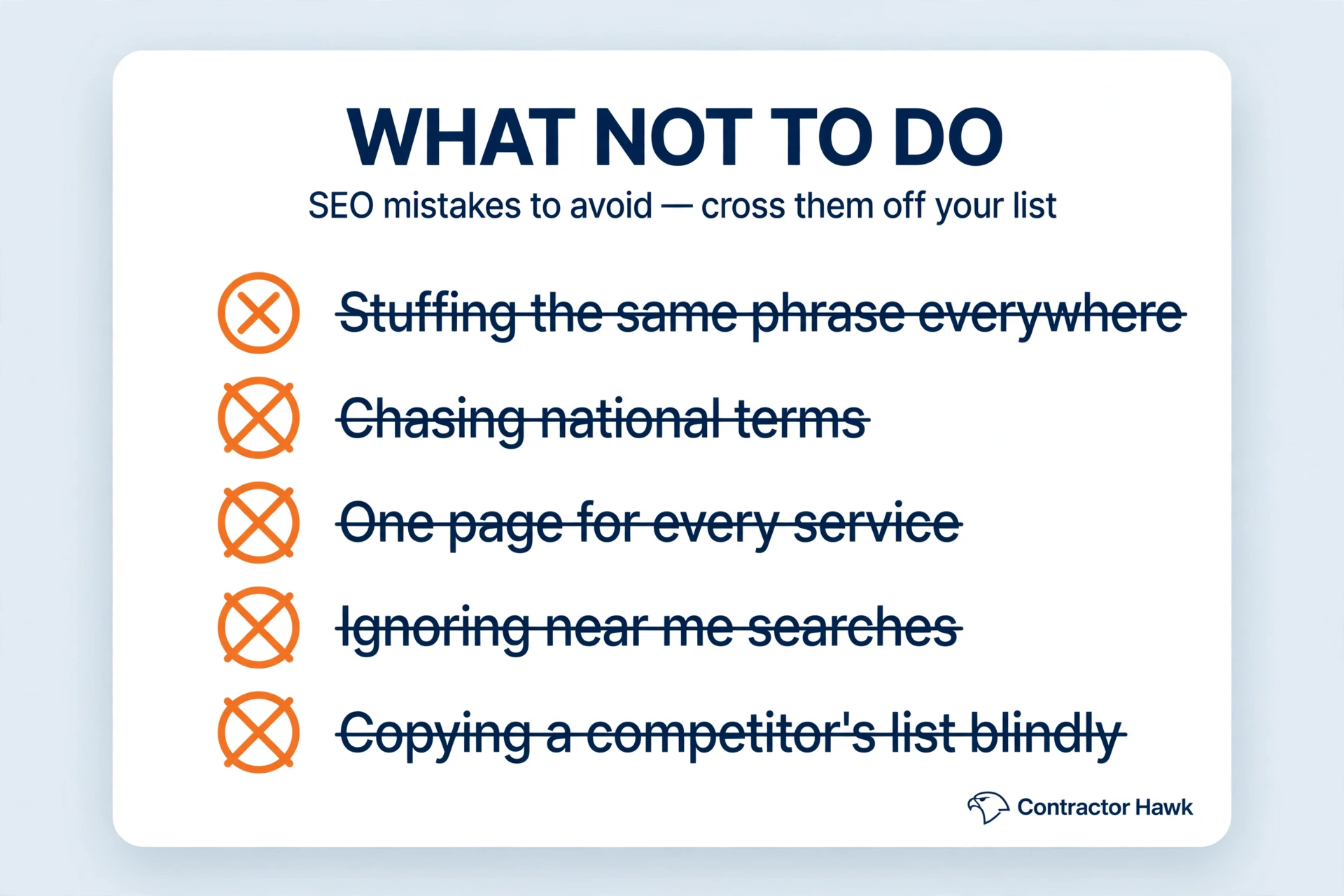
- Stuffing the same phrase everywhere. Repeating “AC repair Houston” twenty times on a page does not help. It reads badly and Google ignores it. Use the phrase once in the title and once in a heading, then write naturally.
- Chasing national terms. You do not need to rank for “HVAC” alone. You need “furnace repair” plus your town. Local searches bring local calls.
- One page for every service. A single “services” page cannot rank for AC repair, furnace install, and duct cleaning at once. Split them up.
- Ignoring near me searches. These are some of your highest intent searches. If your profile is half empty, you are invisible for them.
- Copying a competitor’s list blindly. Their list fits their business. Build yours from the groups above and the free tools. It takes one afternoon and it fits you exactly.
HVAC keyword questions, answered
How many keywords should each page target?
One main phrase per page, plus its close variations. Your AC repair page targets “AC repair” and naturally covers “air conditioner repair” and “AC repair near me.”
One page, one job. That keeps your writing focused and your rankings clear.
What are the best HVAC keywords for a new company?
Start with emergency and near me searches in your town. They have the clearest buying intent and the fastest payoff.
Add one service page at a time after that. Do not try to cover everything in month one. Ten strong pages beat fifty thin ones.
Should I pay for keyword research tools?
Not at first. Google autocomplete, People Also Ask, and Keyword Planner are free and enough for most shops.
Paid tools help later when you want deeper data on competitors. Spend your money on the pages themselves first. The free tools will keep you busy for months.
Do near me keywords still work?
Yes. Google has gotten better at reading location, so the exact phrase matters less than it used to.
What matters is that your Google Business Profile is complete and your site clearly states where you work. Then Google connects you to nearby searchers on its own.
How long before keyword changes bring calls?
New pages usually take from three to six months to rank well, though Google says some changes show in weeks.
Emergency pages in smaller towns can move faster. Track your rankings monthly and judge in quarters, not days. Steady work wins.
Start with the free steps above this week. Group your hvac keywords, build one service page, and fix the mistakes on your current pages. If you would rather have help with all of this, a marketing partner that works only with HVAC contractors can run it for you.
Want a second pair of eyes on your keywords? We will review your Google profile and website for free and tell you what is costing you calls. Get your free audit.
Our promise: 10 new customers in 60 days, or your third month is free. See the terms.